
Local travel guide
Valladolid History and Architecture: A Responsible First-Time Guide
Understand Valladolid through Zací, colonial settlement, neighborhoods, San Servacio, Calzada de los Frailes, San Bernardino and the War of the Castes without reducing the city to legends or colorful façades.
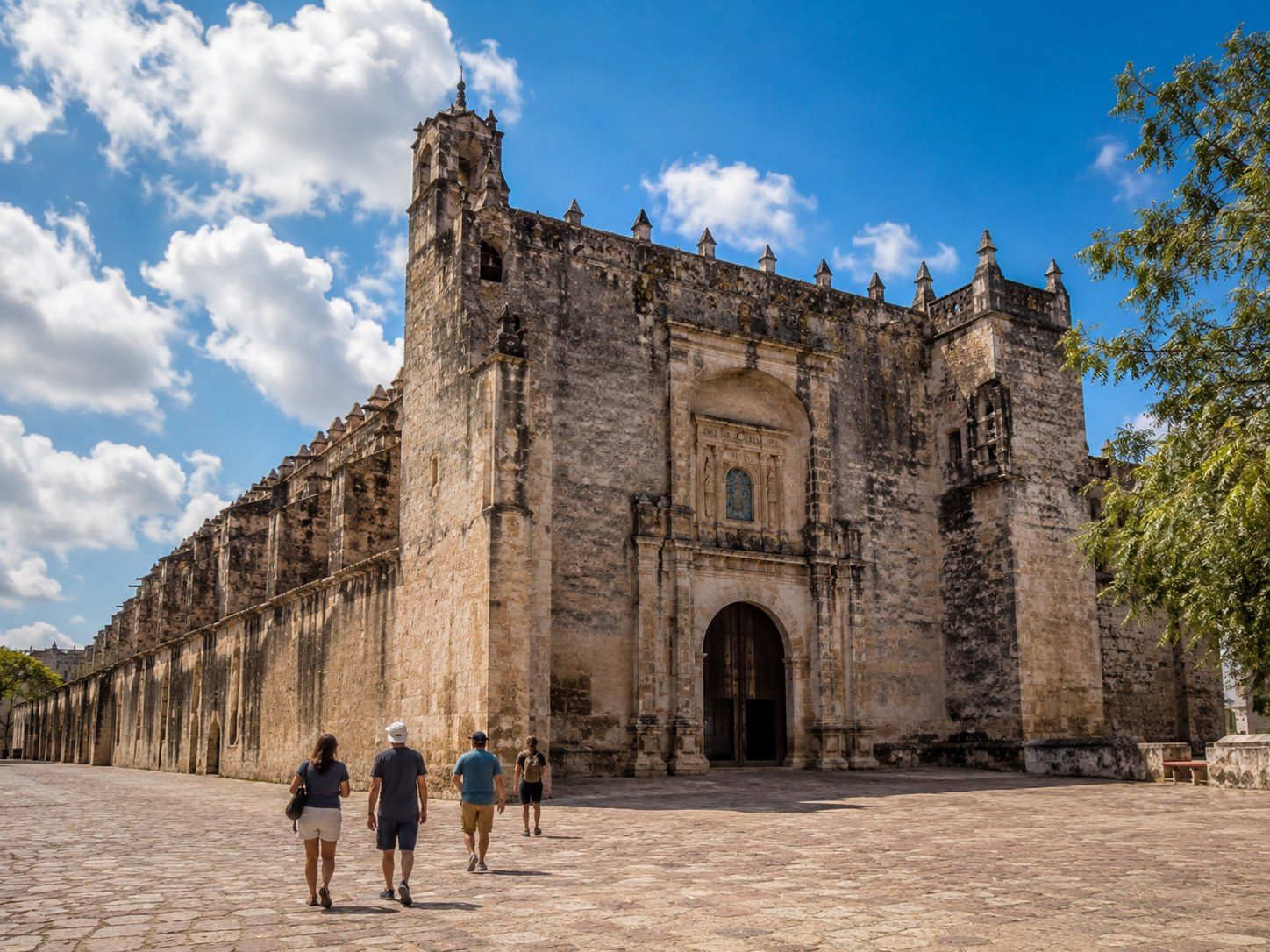
Begin with the name Zací
Before Spanish Valladolid, the area was connected with the Maya place name Zací. Modern references to Heroic Zací and local identity remind visitors that the city’s story did not begin with colonial architecture.
Use language carefully:
- Maya people are living communities.
- Colonial buildings were created through unequal systems as well as skilled labor.
- Historic preservation does not erase conflict.
- Modern neighborhoods are not museum sets.
Spanish Valladolid and relocation
Valladolid was founded during the Spanish colonial period and relocated to the Zací area.
Exact founding narratives can be simplified in tourism summaries. Use official museum and scholarly interpretation for detailed chronology.
Recommendation: Avoid saying the city was “discovered.”
Main square and San Servacio
The central square represents civic, religious and commercial organization.
The current church of San Servacio reflects rebuilding and later historical episodes. State tourism information connects its present form with the early 18th century and local accounts of the “crime of the mayors.”
A responsible first visit observes:
- Building orientation
- Relationship to the plaza
- Later modifications
- Active religious use
- Public memory
Do not present every dramatic story as fully documented without naming the source.
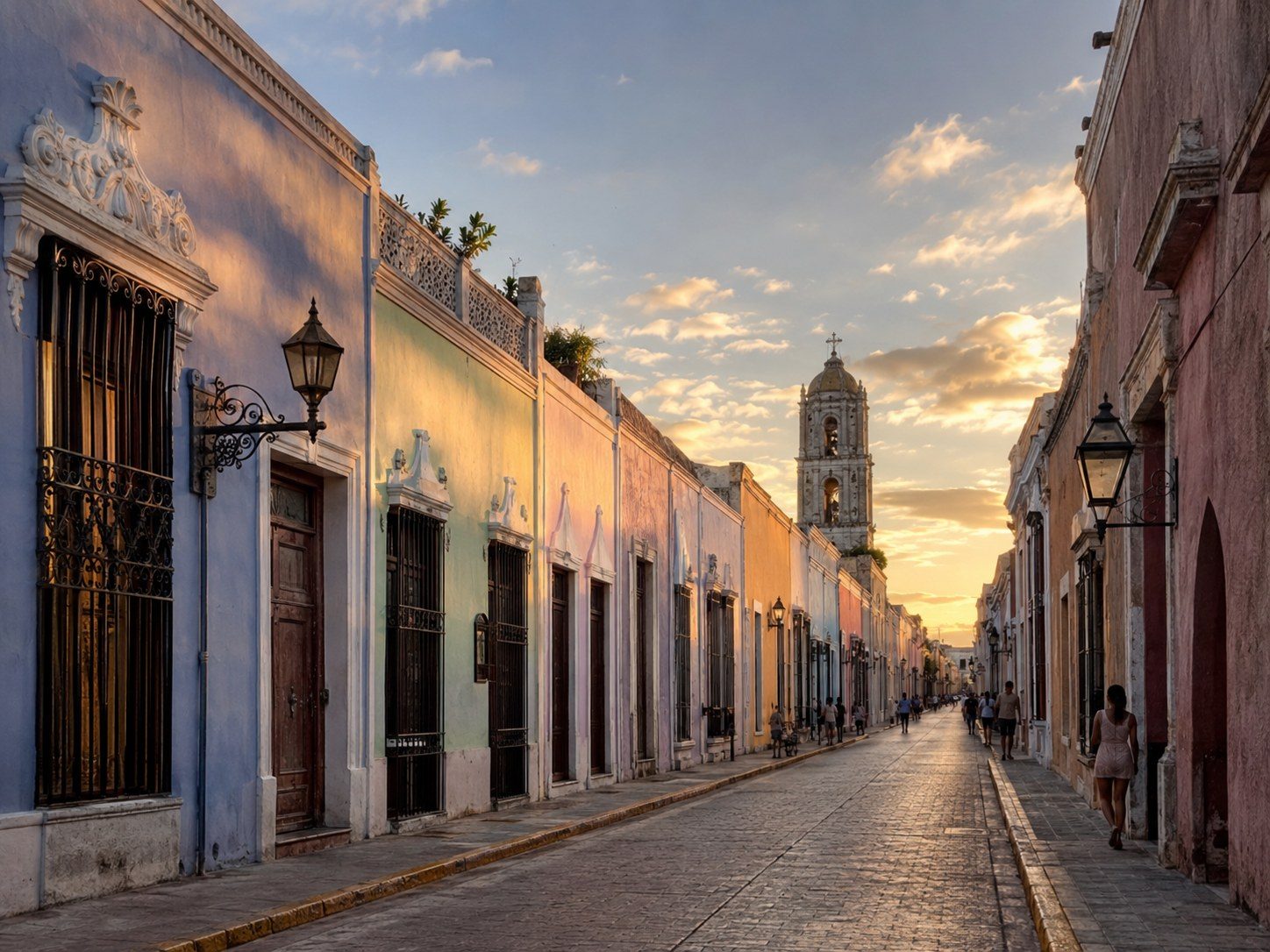
Calzada de los Frailes
The calzada historically connected Valladolid with the Sisal settlement.
Its current visual appeal comes from:
- Scale
- Façades
- Street alignment
- Restored details
- Mixed residential and commercial use
- Relationship to San Bernardino
The street has changed over time. “Colonial” should not imply that every visible color, door or finish is original to the 16th century.
Former Convent of San Bernardino de Siena
The convent complex is one of Valladolid’s major historic landmarks and an important Franciscan site in Yucatán.
INAH research has also documented a cenote beneath the complex and the conservation of material connected with it.
Observe:
- Fortified appearance
- Church and convent relationship
- Water infrastructure
- Open plaza
- Museum interpretation
- Later uses and restoration
Current museum content and access should be verified.
Neighborhoods
Valladolid’s historic identity includes more than the center.
Neighborhood churches, markets and streets show how the city developed through distinct communities.
A guide or museum can help explain:
- Sisal
- Santa Ana
- Candelaria
- San Juan
- Santa Lucía
Do not reduce neighborhoods to photo stops.
War of the Castes
Valladolid was deeply affected by the 19th-century conflict commonly called the Caste War of Yucatán. Scholarly work emphasizes land, power, race, political conflict and long-term regional consequences.
Avoid a simple story of two fixed groups.
Use careful language:
- Identify who made a claim.
- Distinguish a local monument from a complete history.
- Recognize that terminology itself can be debated.
- Avoid sensational descriptions.
- Respect living memory.
Museums and private collections
Museo de San Roque can provide city and regional context when open.
Casa de los Venados is a private home and folk-art collection that has offered public visits under specific procedures. Its schedule, donation request, reservation and access should be verified directly.
A private collection is not the same as a public museum.
Architecture photography
Photograph:
- Building relationships
- Street widths
- Material details
- Public signs
- Restoration evidence
- Human scale
Avoid:
- Blocking religious entrances
- Photographing through private windows
- Flying drones without permission
- Climbing walls
- Entering restricted areas
- Treating residents as visual props
Google Maps
- Main square: https://www.google.com/maps/search/?api=1&query=Parque+Principal+Francisco+Canton+Valladolid
- San Servacio: https://www.google.com/maps/search/?api=1&query=Iglesia+de+San+Servacio+Valladolid
- San Bernardino: https://www.google.com/maps/search/?api=1&query=Convento+de+San+Bernardino+de+Siena+Valladolid
- Museo de San Roque: https://www.google.com/maps/search/?api=1&query=Museo+de+San+Roque+Valladolid
- Casa de los Venados: https://www.google.com/maps/search/?api=1&query=Casa+de+los+Venados+Valladolid
Follow official signs and staff rather than crossing barriers for a map shortcut.
Accidental Gringo tips
- Read the city as layers, not one period.
- Ask whether a building name is original or later.
- Use local museums for chronology.
- Separate documented history from legends.
- Photograph public context.
- Support guides who acknowledge uncertainty.
Warnings
Religious and historic sites can close for worship, conservation, events or maintenance.
Do not repeat violent or racialized historical claims without reliable context.
Common mistakes
- Describing Valladolid as if its history began with Spain.
- Calling every visible façade an untouched colonial original.
- Turning the War of the Castes into a simple tourist legend.
Frequently asked questions
Is Valladolid a colonial city?
Colonial architecture is important, but the city also reflects pre-Hispanic Maya presence, later conflict, neighborhood life and modern Yucatán.
What is the historical importance of Calzada de los Frailes?
State tourism sources describe it as a 16th-century connection between Valladolid and the Sisal settlement.
Is Casa de los Venados a public museum?
It is a private home and collection that has offered public visits. Confirm the current procedure directly.
Verification notes
Last reviewed: July 14, 2026
This article separates stable planning guidance from details that can change. Recheck the following official sources shortly before publication and again before travel:
- Yucatán official tourism — Valladolid Pueblo Mágico: https://yucatan.travel/en/culture/magic-town-of-valladolid/
- Valladolid municipal government: https://www.valladolid.gob.mx/
- Mexico Secretariat of Tourism — Valladolid, Yucatán: https://www.gob.mx/sectur/articulos/valladolid-yucatan
- INAH bulletin on research and conservation connected with the cenote beneath San Bernardino: https://www.inah.gob.mx/boletines/el-inah-continua-con-registro-de-vestigios-encontrados-en-el-cenote-siis-ja-en-yucatan
- INAH scholarly article on historical causes of the War of the Castes: https://revistas.inah.gob.mx/index.php/historias/article/view/13628
Needs Review before future publication updates: Museum and church access, private-collection visits, restoration areas, guided-tour schedules, event closures and any detailed historical claim not directly supported by an authoritative source.