
Local travel guide
Cancún Sargassum Guide: How to Check Conditions and Adjust Your Beach Day
Sargassum conditions can vary by beach, wind and day. Use official bulletins and current local observations, avoid direct contact with decomposing accumulations and keep a backup beach or non-beach plan.
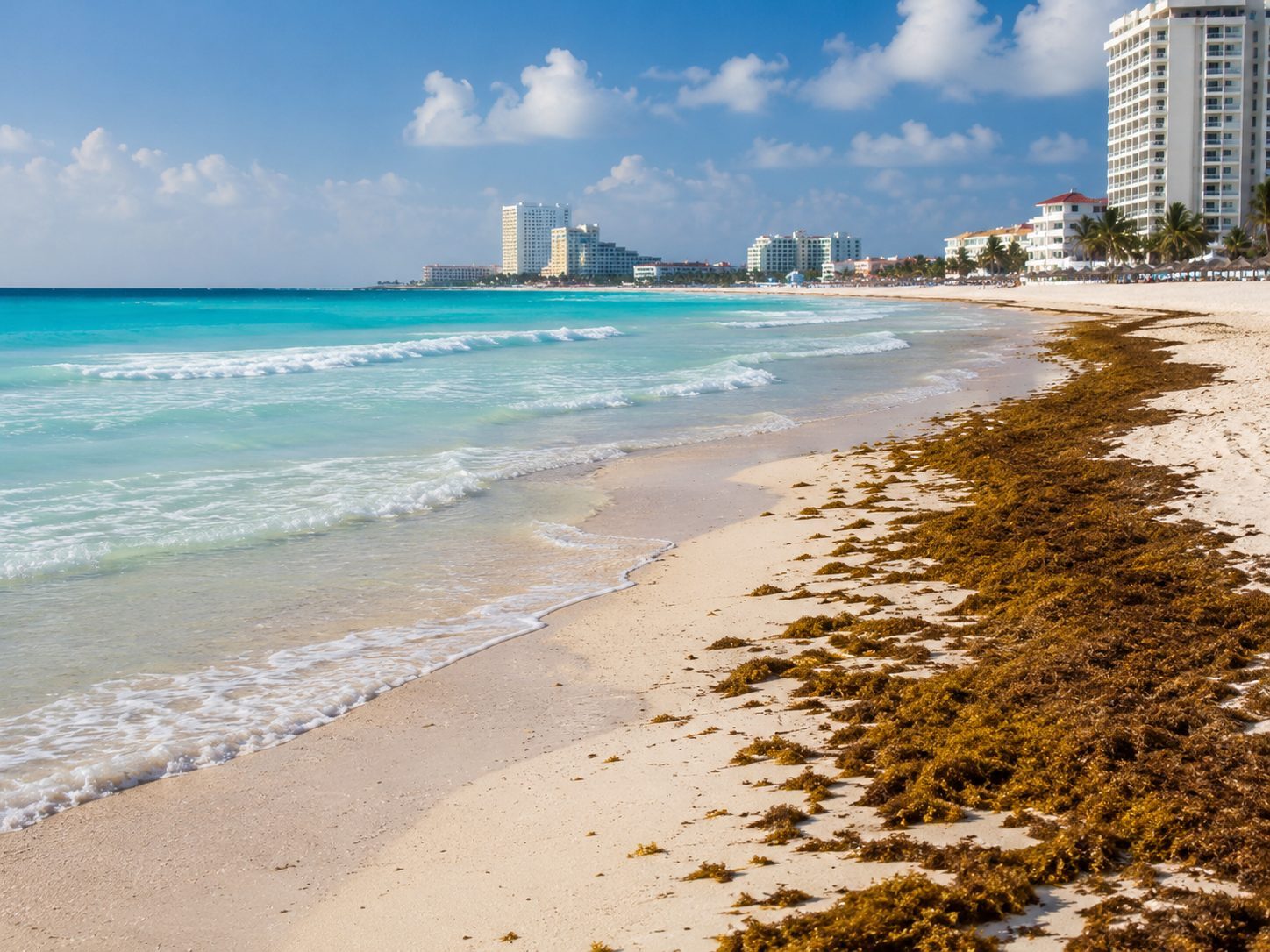
What sargassum is
Sargassum is a floating brown seaweed found naturally in the Atlantic and Caribbean.
At sea, it provides habitat for marine life. When large amounts reach shore and begin decomposing, they can affect:
- Water access
- Odor
- Appearance
- Walking along the shoreline
- Beach-cleaning operations
- Comfort for people sensitive to airborne gases or direct contact
The presence of sargassum is not the same at every beach or every hour.
When sargassum is more common
CDC travel guidance for Mexico identifies the main sargassum season as generally April through August.
That range is useful for planning, not a guarantee. Arrivals can occur outside it, and some days within the season have relatively limited accumulation.
Wind, currents, offshore mats, storms and cleanup operations all affect what visitors find.
Why one beach can look different from another
Cancún’s coastline changes direction around the Hotel Zone.
A beach exposed to the wind and current may receive more seaweed than a more sheltered beach at that moment. Another day, the pattern may shift.
Do not assume:
- Every Hotel Zone beach has the same amount
- A social-media photograph from yesterday is still accurate
- A cleaned beach will remain clear all day
- A beach with sargassum is permanently affected
- A familiar beach will match last year’s conditions
Accidental Gringo recommendation: Check conditions as close to departure as practical, then keep the plan flexible.
Official information to check
SEMAR sargassum bulletins
Mexico’s Navy publishes sargassum monitoring bulletins and an archive through its oceanographic service.
Use the latest bulletin to understand regional risk and offshore movement. A regional map may not predict the exact amount at one public entrance.
Cancún municipal updates
The Municipality of Benito Juárez publishes information about cleanup operations and collected volume.
A June 2026 municipal update described hundreds of workers and extended daily operations at public beaches. The same announcement reported a substantial year-over-year increase in material collected during May.
Collection totals show the scale of the operation. They do not tell a traveler exactly what one beach looks like at a particular hour.
Beach-level observation
After checking official sources, look for a current view from the actual beach when available.
Use recent, dated information and avoid relying on an undated photo.
Understanding cleanup
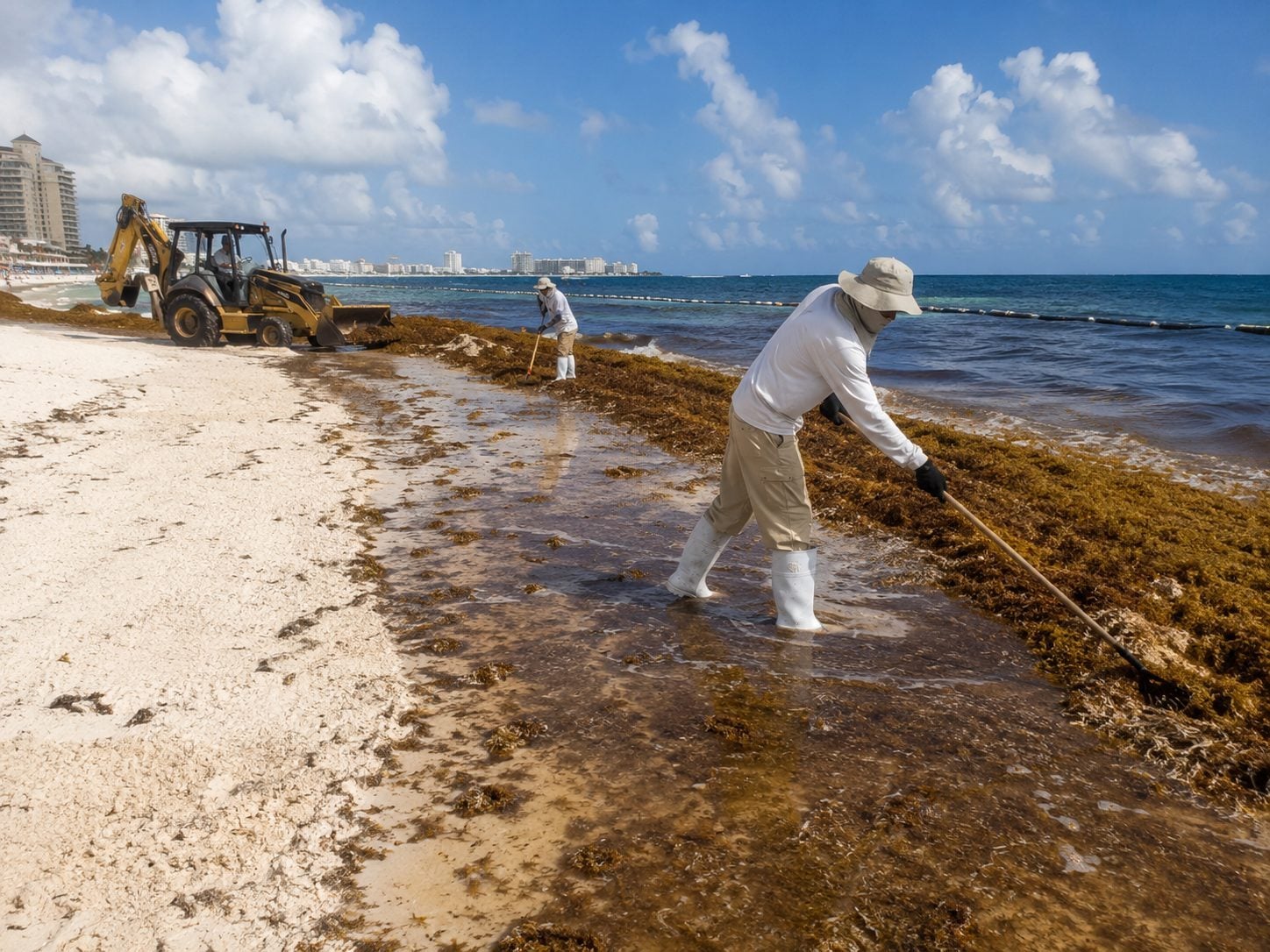
Municipal and private crews may:
- Remove seaweed manually
- Use collection equipment
- Move material away from the active shoreline
- Return after new arrivals
- Prioritize access points or high-use areas
A beach can receive new sargassum after cleaning.
Respect workers and equipment:
- Stay out of active work zones
- Do not climb on collection machinery
- Keep children away from piles and vehicles
- Follow temporary barriers
- Do not interfere for photographs
Health and comfort considerations
CDC guidance advises avoiding direct skin contact with sargassum and rinsing with fresh water after contact.
Decomposing accumulations can release gases that may cause unpleasant odor and respiratory irritation.
People with asthma or other respiratory sensitivity may need to leave sooner when air quality feels uncomfortable.
Leave the area when:
- The odor is strong and persistent
- Eyes, throat or breathing become irritated
- A child or adult begins coughing or feels unwell
- The shoreline is blocked by decomposing material
- Cleanup activity makes the area unsuitable
Seek medical help when:
- Breathing difficulty is significant
- Symptoms continue after leaving the area
- Skin irritation is severe or persistent
- A person has a serious underlying condition and reacts
This article provides general travel planning, not personal medical diagnosis.
Direct contact
Do not encourage children to play in piles of sargassum.
Piles may contain:
- Small marine animals
- Sharp natural material
- Trash
- Insects
- Uneven footing
- Decomposing matter
After accidental contact:
- Rinse skin with fresh water
- Change wet clothing when needed
- Avoid rubbing irritated eyes
- Monitor symptoms
- Seek medical advice when symptoms persist
Does sargassum mean the beach is unsafe for swimming?
Sargassum and swimming flags communicate different information.
A beach with little seaweed may still have dangerous waves or currents. A beach with some seaweed may display a green flag.
Check both:
- Sargassum conditions
- Physical swimming flag
- Lifeguard instructions
- Weather
- Water-quality notices when issued
Never use a clear shoreline as proof that the sea is safe.
Choosing another beach
When sargassum affects the planned beach, options may include:
- Checking a more sheltered northern beach
- Visiting another public beach with a different coastline orientation
- Enjoying the sand away from the affected waterline
- Choosing a pool day
- Visiting a museum, market or indoor attraction
- Moving the beach visit to another morning
Do not promise that a specific beach will always be sargassum-free.
What to ask a hotel or host
Ask:
- What does the beach look like today?
- When was the observation made?
- Is cleanup currently underway?
- Is the waterline usable?
- Is there a strong odor?
- Is there a live camera or current photo?
- Which nearby public access is clearer today?
A general statement such as “the beach is fine” is less useful than a dated observation.
Google Maps and planning
Official SEMAR bulletin archive: https://digaohm.semar.gob.mx/op-sargazo/boletines.html
Cancún public beaches: https://www.google.com/maps/search/?api=1&query=public+beaches+Cancun
Official beach dashboard: https://tablerodeplayas.implancancun.gob.mx/
The public beach dashboard focuses on flags, lifeguards, crowd levels and locations. Do not assume it provides a complete sargassum measurement for every beach.
A flexible beach-day method
The evening before
- Check the regional bulletin
- Save two beach pins
- Prepare a non-beach backup
- Charge the phone
The morning of the visit
- Look for a recent beach-level observation
- Check wind and weather
- Review the official beach dashboard
- Ask the hotel or host for a current view
After arriving
- Look at the waterline before unloading everything
- Check the flag
- Notice odor and cleanup activity
- Decide whether to stay, move or change activities
Accidental Gringo tips
- Do not cross the Hotel Zone based on an undated social post.
- Ask for a photo taken that morning.
- Keep swimming safety separate from sargassum appearance.
- Rinse after contact.
- Give cleanup workers room.
- Carry a backup activity that does not depend on the shoreline.
Warnings
- Avoid direct contact with large or decomposing accumulations.
- Leave when odor or respiratory irritation develops.
- Keep children away from piles and cleanup equipment.
- A clear-looking beach can still have a dangerous swimming flag.
- Regional bulletins do not guarantee exact beach-level conditions.
- Never describe a beach as permanently sargassum-free.
Three common mistakes
Mistake 1: Using an old photo as a live report
Conditions can change within hours.
Mistake 2: Confusing sargassum level with swimming safety
Check the beach flag separately.
Mistake 3: Building the whole day around one beach
Save a second beach and a non-beach activity.
Frequently asked questions
When is sargassum season in Cancún?
CDC travel guidance identifies April through August as the main season, but arrivals can occur outside that range.
Which Cancún beach has no sargassum?
No beach should be promised as permanently sargassum-free. Conditions vary with wind, currents and cleanup.
Is sargassum dangerous?
Fresh seaweed is a natural material, but large decomposing accumulations can cause odor, irritation and uncomfortable air conditions. Avoid contact and leave when symptoms develop.
Can I swim when sargassum is present?
Swimming depends on the flag, waves, currents, water quality and the amount of seaweed. Ask the lifeguard.
Where can I check conditions?
Use SEMAR’s current bulletin, municipal updates and a recent beach-level observation.
What should I do after touching sargassum?
Rinse with fresh water, change clothing when needed and seek medical advice for serious or persistent symptoms.
Related Accidental Gringo guides
- Cancún Beach Comparison
- Calm-Water Beaches in Cancún
- Cancún Beach Safety and Flag Guide
- Playa Delfines Visitor Guide
- Playa Langosta Visitor Guide
- Chac Mool, Marlín and Ballenas Guide
Verification notes
Last reviewed: July 14, 2026
Verified facts
- SEMAR publishes sargassum monitoring bulletins.
- CDC identifies April through August as the main Mexico sargassum season.
- CDC advises avoiding direct contact and rinsing with fresh water after contact.
- Decomposing sargassum can release gases associated with respiratory irritation.
- Cancún’s municipality reports active cleanup operations and collection totals.
Needs Review
- The latest SEMAR risk map
- Beach-level accumulation on the publication date
- Current cleanup schedule
- Any official water-quality closure
- Current health advisories
- Live-camera availability
- Temporary restricted work zones
Official sources
- SEMAR sargassum bulletins: https://digaohm.semar.gob.mx/op-sargazo/boletines.html
- Cancún municipal cleanup update: https://cancun.gob.mx/cancun/noticias/leer/3927
- Cancún municipal collection update: https://www.cancun.gob.mx/cancun/noticias/leer/3977
- CDC Mexico destination guidance: https://wwwnc.cdc.gov/travel/destinations/traveler/none/mexico
- CDC sargassum health information: https://wwwnc.cdc.gov/eid/article/29/1/22-0970_article
- Public Beach Dashboard: https://tablerodeplayas.implancancun.gob.mx/