
Local travel guide
Cancún Beach Safety and Flag Guide: What the Colors Mean
Cancún uses colored flags to communicate daily swimming conditions. Green means conditions are considered favorable, yellow signals moderate risk and caution, and red means danger—do not enter the sea.
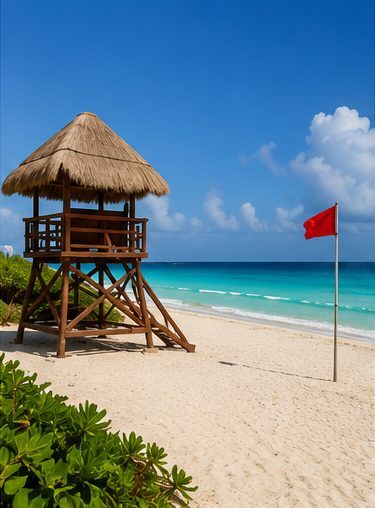
Green flag: favorable does not mean risk-free
A green flag indicates that officials consider conditions suitable for normal beach use.
It does not mean:
- Children can swim without supervision
- Currents are impossible
- Weak swimmers should go beyond their ability
- Conditions will remain the same all day
- Swimming near boats, piers or structures is appropriate
- Alcohol and ocean swimming are a safe combination
Stay inside the designated swimming area and ask the lifeguard where conditions are most appropriate.
Yellow flag: slow down and reassess
A yellow flag indicates moderate risk and the need for caution.
The cause may involve:
- Stronger waves
- Currents
- Changing depth
- Wind
- Visibility
- Marine activity
- Another hazard not obvious from shore
During a yellow flag:
- Ask what prompted the warning
- Keep toddlers and weak swimmers out when uncertain
- Avoid going beyond a depth where you remain stable
- Do not rely on an inflatable toy
- Leave immediately when instructed
- Consider a sand-and-shoreline visit instead
Accidental Gringo recommendation: Families with toddlers, inexperienced swimmers and anyone uncomfortable in moving water should treat yellow as a reason to choose a lower-risk activity.
Red flag: do not enter the sea
Municipal guidance is direct: a red flag means danger and no entry.
A red flag is not permission to:
- Wade “just a little”
- Enter because other people are swimming
- Move farther down the same beach and try again
- Let children play where waves are breaking
- Assume the warning applies only to weak swimmers
Enjoy the view, photographs and sand while remaining clear of dangerous wave run-up.
Why flags change
Flags respond to current conditions rather than the forecast you checked the previous night.
Changes may involve:
- Wind
- Wave height
- Currents
- Storms nearby
- Visibility
- Marine activity
- Water-quality or operational concerns
- Civil Protection instructions
Check again after rain, a wind shift, a visible increase in waves or a break away from the beach.
The official beach dashboard
Cancún’s municipal Public Beach Dashboard may report:
- Flag color
- Lifeguard presence
- Visitor level
- Beach location
- Weather information
The municipality reported updates every two hours between 9:00 a.m. and 7:00 p.m.
The dashboard helps with planning, but the physical flag and onsite instructions are more current.
Rip currents: the hazard travelers may not recognize
A rip current is a focused flow of water moving away from shore. It can carry a swimmer outward without pulling the person under.
NOAA’s guidance includes:
- Stay calm
- Float or conserve energy
- Do not exhaust yourself fighting directly against the flow
- Wave and call for help
- Move parallel to shore when able
- Return toward shore at an angle after clearing the current
If you see someone in trouble
Alert a lifeguard immediately.
Do not create a second emergency by attempting an untrained rescue. From shore, throw something that floats when possible and follow instructions from trained responders.
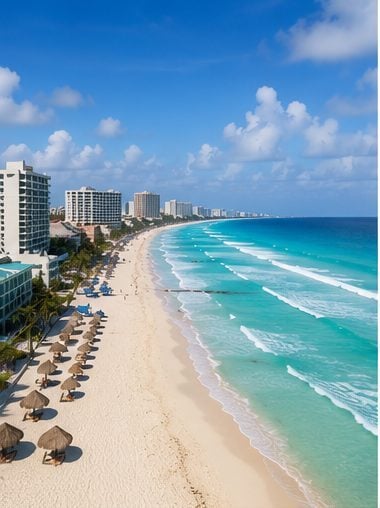
The safest place to swim
Choose an area:
- Monitored by a lifeguard
- Inside the designated swimming zone
- Away from piers and boat channels
- Where the flag is visible
- Appropriate to your actual swimming ability
- Where someone knows you entered the water
Municipal reports have identified lifeguard coverage at major public beaches, but exact assignments and hours change.
Children and beach safety
For children:
- Use active, direct supervision
- Keep young children within immediate reach
- Assign one adult as the water watcher
- Rotate that adult clearly
- Do not let children follow stronger swimmers into deeper water
- Explain flag colors before arriving
- Leave before fatigue becomes obvious
A lifeguard watches the beach. A parent or guardian watches the individual child.
Alcohol and swimming
Municipal safety guidance advises visitors not to enter the sea after consuming alcoholic beverages.
Sun, dehydration and alcohol can impair judgment and swimming ability. Plan transportation and swimming decisions before drinking.
Sun and heat safety
Water safety is only part of a Cancún beach day.
CDC travel guidance recommends:
- Reducing direct exposure during the strongest midday sun
- Using shade
- Wearing protective clothing
- Applying sunscreen according to its label
- Drinking non-alcoholic fluids
Water and sand reflect ultraviolet radiation. Shade alone does not remove exposure.
Wildlife and unfamiliar warnings
Do not touch, collect or chase marine animals.
Give wildlife space and notify beach personnel when an animal is injured, trapped or unusually close to a busy swimming area.
Do not invent meanings for an unfamiliar flag or sign. Ask a lifeguard or beach information worker.
Needs Review: Current local instructions for jellyfish, turtle-nesting areas, marine fauna and temporary wildlife warnings.
Beach rules that support safety
Municipal information states that its Blue Flag public beaches are smoke-free and prohibit glass containers.
Also:
- Keep access paths clear
- Do not block lifeguard towers
- Respect roped-off areas
- Use waste containers
- Follow dune and restoration signs
- Fill deep holes before leaving
Lifeguard hours
Do not publish one permanent schedule for every beach and season.
A 2024 municipal announcement described standard public-beach coverage from 9:00 a.m. to 5:00 p.m. A December 2025 holiday operation extended reinforced service at selected beaches to 7:00 p.m.
Those examples show why hours must be dated and checked.
Being on the beach outside lifeguard hours does not mean swimming is advisable.
Emergency information
Mexico’s national emergency number is 911.
When calling, give:
- Beach name
- Nearest access point or landmark
- Nature of the emergency
- Number of people involved
- Flag color when known
- Your callback number
Needs Review: Add any current local Civil Protection, Tourist Police or beach-assistance contacts only after confirming their intended public use.
Google Maps
Official beach dashboard: https://tablerodeplayas.implancancun.gob.mx/
General public beaches map: https://www.google.com/maps/search/?api=1&query=public+beaches+Cancun
Save the exact beach name and access point. “Cancún beach” alone is not enough for emergency directions.
Accidental Gringo tips
- Photograph the flag when arriving so everyone in the group notices it.
- Check the actual flag again before each swim.
- Ask the lifeguard where the recommended swimming zone is.
- Keep a flotation aid available without treating it as a substitute for supervision.
- Leave the water early when tired.
- Choose a shoreline activity rather than arguing with a warning.
Warnings
- Red means do not enter.
- Green does not mean risk-free.
- No visible flag does not mean safe.
- Other swimmers do not determine your safety.
- Inflatables are not life jackets.
- Do not attempt an untrained rescue.
- Conditions can change faster than an online dashboard update.
Three common mistakes
Mistake 1: Looking at the flag only once
Conditions can change during the day.
Mistake 2: Treating green as a guarantee
Green still requires supervision and judgment.
Mistake 3: Following the crowd
Other visitors may be ignoring instructions.
Frequently asked questions
What does a red flag mean?
Danger. Do not enter the sea.
Can children swim during a yellow flag?
Yellow means moderate risk. Young children and weak swimmers may be better staying out. Ask the lifeguard.
Is a green flag completely safe?
No. It means conditions are considered favorable, not that all risk has disappeared.
What if no flag is visible?
Find a lifeguard or information point. When conditions are unclear, choose not to swim.
What should I do in a rip current?
Stay afloat, avoid fighting directly against it, call or wave for help and move parallel to shore when able.
Are lifeguards at every beach all day?
No. Coverage exists at many public beaches, but assignments and schedules change.
Can I use an inflatable instead of a life jacket?
No. An inflatable toy is not approved safety equipment and does not replace supervision.
Related Accidental Gringo guides
- Cancún Beach Comparison
- Playa Delfines Visitor Guide
- Calm-Water Beaches in Cancún
- Cancún Beaches for Families
- Cancún Sargassum Guide
Verification notes
Last reviewed: July 14, 2026
Verified facts
- Municipal guidance defines green, yellow and red swimming flags.
- The municipal dashboard reports flags and lifeguard presence.
- Municipal reports identify trained lifeguard coverage at major beaches.
- NOAA provides rip-current escape and rescue guidance.
- Mexico’s national emergency number is 911.
- Blue Flag beaches are reported as smoke-free and glass-free.
Needs Review
- Any additional locally used flag colors
- Current lifeguard hours
- Current Civil Protection and Tourist Police beach contacts
- Jellyfish and wildlife-specific warnings
- Temporary closures or contaminated-water restrictions
- Multilingual beach-assistance services
Official sources
- Flag and holiday lifeguard guidance: https://cancun.gob.mx/cancun/noticias/leer/3354
- Public Beach Dashboard: https://tablerodeplayas.implancancun.gob.mx/
- Dashboard announcement: https://cancun.gob.mx/cancun/noticias/leer/3663
- NOAA rip currents: https://www.noaa.gov/jetstream/rip-currents
- CDC sun guidance: https://wwwnc.cdc.gov/travel/page/sun-exposure
- Mexico 911: https://www.gob.mx/911