
Local travel guide
Calm-Water Beaches in Cancún: Where to Start Your Search
Travelers looking for gentler water should begin with the more sheltered beaches around the northern curve of Cancún’s Hotel Zone. Las Perlas, Langosta, Caracol and Tortugas are useful starting points, but no beach is calm every day.
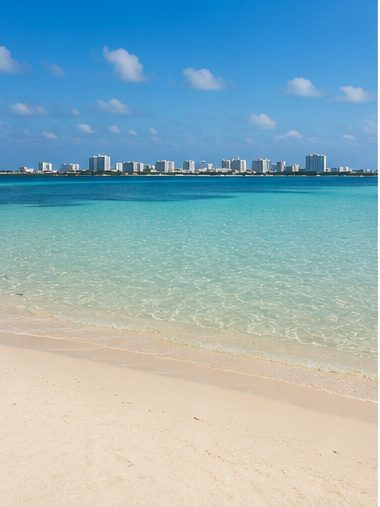
What “calm water” means in this guide
“Calmer” is a general planning description. It means a beach is usually more sheltered from direct open-Caribbean wave action than beaches along the eastern side of the Hotel Zone.
It does not mean:
- No currents
- No sudden changes in depth
- No boat wake
- No yellow- or red-flag days
- No need for adult supervision
- Safe conditions for every swimmer
Accidental Gringo recommendation: Use the beach name to choose where to start looking. Use the flag and the water in front of you to make the final decision.
Why the northern beaches are often gentler
Cancún’s Hotel Zone curves around the coast. Beaches around the northern section face a more protected body of water than the beaches exposed directly to the Caribbean.
That geographic difference is why travelers often begin with Las Perlas, Langosta, Caracol or Tortugas when they want easier wading or less wave action.
Conditions still vary from one end of a beach to the other and from one hour to the next.
Playa Las Perlas
Las Perlas is a useful all-around starting point for travelers balancing a generally sheltered location, municipal services and accessibility planning.
It is one of the seven municipal public beaches recognized with Blue Flag status for the 2026–2027 season.
Municipal accessibility work has included:
- Ramps and handrails
- Accessible bathrooms
- Tactile guidance
- Designated palapas
- Amphibious mobility equipment
- Adapted beach equipment
- QR-linked information with sign-language content
Good fit for: Families, shorter visits, travelers staying closer to downtown and people who need to investigate accessible beach options.
Keep in mind: The beach is more compact than Delfines, Marlín or Ballenas. Accessibility equipment, assistance and operating procedures should be confirmed before relying on them.
Playa Langosta
Langosta is a common starting point for families because of its generally more protected location.
It is not among the seven municipal beaches announced with Blue Flag recognition for 2026–2027, so do not automatically apply the complete Blue Flag facility package to it.
Municipal lifeguard reports have included Langosta among staffed public beaches, but assignments and hours can change.
Good fit for: Toddlers, cautious swimmers and travelers who value gentler water over a long open coastline.
Needs Review: Current bathrooms, parking, shade, construction, exact public entrance and transportation stops.
Playa Caracol
Caracol can work well for travelers staying nearby who want a short beach outing rather than a full-day setup.
Its northern position makes it a reasonable gentler-water candidate, but the public beach footprint is compact and can feel busy.
Good fit for: Short visits, nearby hotel guests and families who do not need a large stretch of sand.
Keep in mind: Confirm the public entrance and usable beach area. Do not assume every nearby resort entrance provides public access.
Playa Tortugas
Tortugas combines a generally more protected position with a livelier atmosphere.
Travelers may encounter boat activity, commercial services and more movement around the beach than at a quiet scenery-focused stop.
Good fit for: Families with mixed interests, social groups and travelers who want activity around them.
Keep in mind: Stay in designated swimming areas and away from boat operations. The water may be gentler than on the open eastern coastline without being quiet or uncrowded.
How the open-Caribbean beaches compare
Delfines, Ballenas, Marlín and Chac Mool offer a different kind of beach day.
They can be excellent for:
- Broad Caribbean views
- Beach walks
- Photography
- More open sand
- Sunrise
- Enjoying the shoreline when swimming is limited
They are not the first starting point when a traveler’s only priority is the gentlest possible water.
This is not a ranking. It is a match between the beach’s general setting and the traveler’s needs.
Read the flag every time
Municipal guidance uses three main swimming flags:
- Green: Conditions are considered favorable, but normal ocean risks remain.
- Yellow: Moderate risk. Use caution and speak with the lifeguard.
- Red: Danger. Do not enter the sea.
A beach known for gentler water can still display a red flag. Other people swimming do not cancel the warning.
Check the flag again after a weather change, after leaving for lunch or before a second swim later in the day.
Official beach-condition dashboard
The Municipality of Benito Juárez operates a Public Beach Dashboard that may show:
- Current flag color
- Reported lifeguard presence
- Crowd level
- Beach location
- Weather information
The municipality reported updates every two hours between 9:00 a.m. and 7:00 p.m.
Use the dashboard to plan, then verify the physical flag onsite.
Google Maps
- Las Perlas: https://www.google.com/maps/search/?api=1&query=Playa+Las+Perlas+Cancun
- Langosta: https://www.google.com/maps/search/?api=1&query=Playa+Langosta+Cancun
- Caracol: https://www.google.com/maps/search/?api=1&query=Playa+Caracol+Cancun
- Tortugas: https://www.google.com/maps/search/?api=1&query=Playa+Tortugas+Cancun
A map pin may not identify the exact public entrance, parking entrance, accessible drop-off point or correct bus stop.
Accidental Gringo tips
- Save two beach options before leaving the hotel.
- Begin with the beach closest to your group’s needs, not the one with the most dramatic photograph.
- Ask the lifeguard where the recommended swimming zone is.
- Keep children within immediate reach near the water.
- Leave inflatables at the edge when wind or currents can carry them away.
- Bring water and sun protection even for a short stop.
- Be ready to change the plan when the flag changes.
Warnings
- “Calmer” is not a live safety guarantee.
- A red flag means do not enter the sea.
- A yellow flag can be unsuitable for toddlers, weak swimmers or anyone uncomfortable in moving water.
- Boat traffic and docks create separate hazards.
- Lifeguard schedules and facility availability can change.
- Exact bus routes, fares, parking and public entrances remain Needs Review.
Three common mistakes
Mistake 1: Treating “calm” as permanent
Check the actual conditions rather than yesterday’s photograph or an old review.
Mistake 2: Following other swimmers instead of the flag
Other visitors may be ignoring instructions or may have entered before conditions changed.
Mistake 3: Bringing no backup plan
Compact beaches can fill quickly, and the water may not suit your group that day.
Frequently asked questions
Which Cancún beach is usually the calmest?
Las Perlas and Langosta are useful first choices. Neither should be described as permanently calm.
Is Playa Delfines calm?
Delfines faces the open Caribbean. Some days permit swimming, but it is not the first recommendation when gentle water is the main goal.
Is Las Perlas accessible?
The municipality has documented significant accessibility infrastructure and adapted equipment. Confirm current availability and assistance procedures before travel.
Do calm beaches still use warning flags?
Yes. The same safety system applies. A red flag means do not enter.
Is Tortugas quiet?
Tortugas can have a livelier atmosphere, including boat and commercial activity. It may suit travelers who want activity rather than silence.
Can beginners snorkel from these beaches?
Visibility, currents, boat activity and swimming zones vary. Ask the lifeguard and evaluate conditions onsite rather than assuming a beach is suitable.
Related Accidental Gringo guides
- Cancún Beach Comparison
- Playa Delfines Visitor Guide
- Cancún Beaches for Families
- Cancún Beach Safety and Flag Guide
- Playa Las Perlas Visitor Guide
- Playa Langosta Visitor Guide
Verification notes
Last reviewed: July 14, 2026
Verified facts
- Seven municipal public beaches hold Blue Flag recognition for 2026–2027.
- Las Perlas is among the seven recognized municipal beaches.
- The municipality has documented accessibility improvements at Las Perlas.
- The municipal dashboard reports flags, lifeguard presence and crowd information.
- Municipal safety guidance defines green, yellow and red flag meanings.
Editorial planning observations
- Las Perlas, Langosta, Caracol and Tortugas are generally more sheltered starting points.
- Delfines, Ballenas, Marlín and Chac Mool generally experience more open-Caribbean conditions.
These observations do not replace a live assessment.
Needs Review
- Current facilities at Langosta, Caracol and Tortugas
- Exact entrances and bus stops
- Parking conditions
- Lifeguard hours
- Accessibility equipment availability
- Temporary construction, erosion or closures
Official sources
- Blue Flag 2026–2027: https://cancun.gob.mx/cancun/noticias/leer/3992
- Blue Flag audit: https://cancun.gob.mx/cancun/noticias/leer/3870
- Public Beach Dashboard: https://tablerodeplayas.implancancun.gob.mx/
- Dashboard announcement: https://cancun.gob.mx/cancun/noticias/leer/3663
- Las Perlas accessibility: https://cancun.gob.mx/cancun/noticias/leer/1470