
Local travel guide
Chichen Itza Fall Equinox 2026 from Valladolid: September 22 Serpent Shadow, Crowds & How to Plan It
Planning the Chichen Itza fall equinox from Valladolid? Here is what is confirmed for September 2026, what INAH has not announced yet, when the Kukulcan shadow appears, and how I would plan the day without getting caught by crowds or schedule changes.
If you are going to be in Valladolid in late September, this is one of those days I would plan around instead of stumbling into it by accident.
The 2026 fall equinox at Chichen Itza is Tuesday, September 22. Around the equinox, the afternoon sun creates the famous pattern of light and shadow along the north staircase of El Castillo, forming the visual effect people describe as Kukulcan descending the pyramid.
But there is an important difference between knowing the date and knowing how to plan the visit. Chichen Itza gets busier around the equinox, operating rules can change for the event, and the exact astronomical moment is not the same thing as the useful visitor viewing window.
If I were doing it, I would stay in Valladolid and treat Chichen Itza as the main event for the day rather than trying to force it into a long same-day run from Cancun.
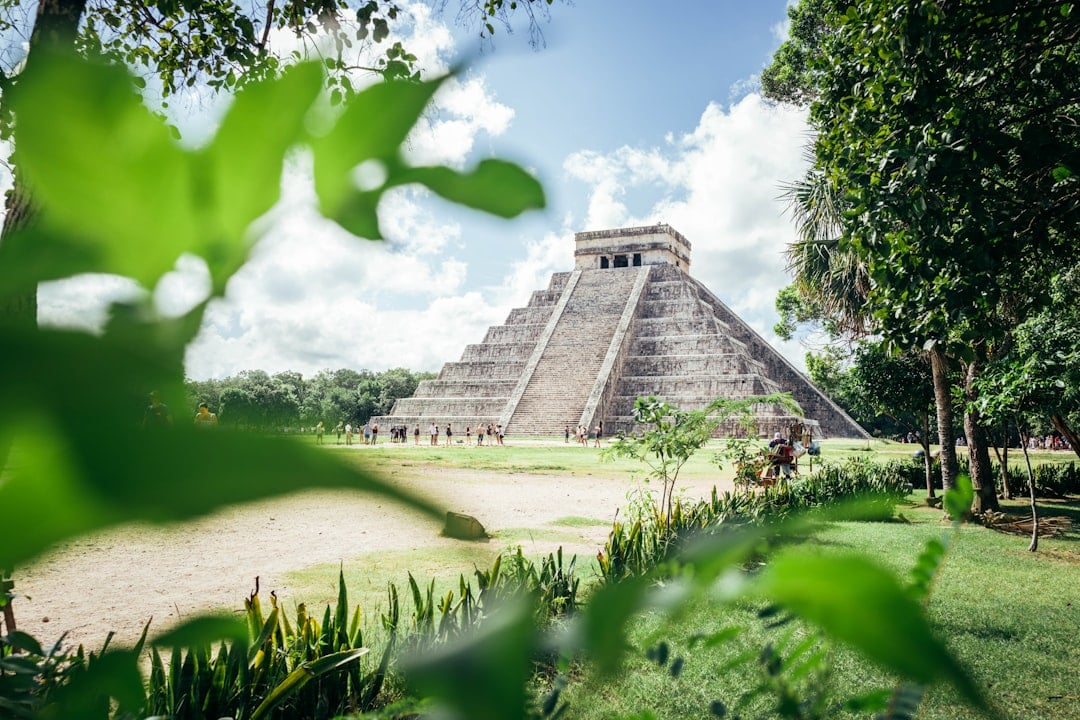
El Castillo is the focus of the equinox light-and-shadow phenomenon at Chichen Itza.
Quick answer: when is the Chichen Itza fall equinox in 2026?
The September equinox occurs on Tuesday, September 22, 2026. The astronomical moment is around 6:05 PM in Yucatan.
Do not make the mistake of interpreting 6:05 PM as the time you should arrive at the archaeological site. The serpent-shadow effect develops during the afternoon and can be visible on days before and after the exact equinox when weather cooperates. INAH has specifically described the phenomenon as occurring in the days around the equinox, not at one single minute.
Mexico's official tourism calendar currently lists the Chichen Itza equinox period for September 20–23, 2026.
What is the Kukulcan serpent shadow?
As the afternoon light hits El Castillo, triangular areas of light and shadow form along the north balustrade. Together with the carved serpent head at the base, they create the appearance of a serpent descending the pyramid.
INAH's 2026 archaeological discussion of El Castillo explains that the pattern changes through the year and that around the autumn equinox seven illuminated triangles frame the event. That is more useful than the simplified version that says the effect suddenly switches on at the exact instant of the equinox.
Clouds matter. This is a sunlight phenomenon, so nobody can guarantee that you will see a perfect serpent just because you bought a ticket for September 22.
What is confirmed for September 2026?
As of September 8, 2026, the official INAH visitor page lists Chichen Itza's normal hours as 8:00 AM to 4:00 PM, with last access at 3:00 PM.
INAH has not yet published a 2026 autumn-equinox operating bulletin that I can find. That matters because special event procedures can change the normal hours, access points and areas available to visitors.
I would not build a September 22 itinerary around somebody's old Facebook post or a tour company's copied schedule. Check the official INAH information again a few days before you go.
Why I expect special instructions closer to the date
Last year, INAH published its autumn-equinox operating notice on September 18, only a few days before the event. For the 2025 operation, INAH adjusted visitor procedures, restricted access to some areas and estimated the light-and-shadow viewing period at roughly 3:00–4:30 PM.
That does *not* mean those will be the 2026 hours. It tells us why waiting for the current INAH notice is important.
The 2025 event drew more than 6,400 visitors, according to the Yucatan state government. So when I say to expect crowds, I am not talking about a slightly busier Tuesday.
Why Valladolid is the base I would choose
If the equinox is the reason for your visit, Valladolid makes the day much easier.
You can wake up nearby instead of starting with a long drive from Cancun, keep your schedule flexible if INAH changes the event procedure, and come back to Valladolid for dinner instead of adding another couple of hours to the end of an already hot and crowded day.
It also gives you options. If clouds ruin the shadow effect, you have not wasted an entire vacation day sitting on a bus. You can still make Chichen Itza the archaeological visit and use the rest of your Valladolid stay for food, the historic center or a cenote.
For the broader regional plan, see our Chichen Itza, Valladolid and cenote day-trip guide.
The schedule I would use
I would keep the day deliberately loose until INAH publishes the special 2026 instructions.
Morning: Have breakfast in Valladolid and avoid packing the morning with another major attraction.
Late morning or early afternoon: Head toward Chichen Itza with more buffer than you normally would. Equinox traffic, parking and ticket lines are exactly the kind of things that turn a comfortable schedule into a stressful one.
Afternoon: Follow the current INAH viewing and crowd-control instructions. If a special viewing window is announced, that becomes the anchor for the entire day.
Evening: Return to Valladolid, clean up and have dinner. This is one of the days when staying overnight makes much more sense to me than trying to race back to Cancun.
Do not forget the Cancun–Valladolid time difference
This catches travelers constantly. Cancun and Quintana Roo are normally one hour ahead of Valladolid, Chichen Itza and the rest of Yucatan.
If your phone changes automatically, great. If you are coordinating a driver, bus, tour pickup or dinner with somebody in another state, say which local time you mean.
The astronomical equinox at about 6:05 PM Yucatan time is about 7:05 PM in Cancun. Again, that is an astronomical reference point, not an announced Chichen Itza visitor-entry time.
What should you bring?
September in inland Yucatan can still be hot, humid and wet. I would bring water, sun protection, a hat, comfortable walking shoes and a light rain layer. I would also keep the bag small.
INAH's current rules prohibit food inside the archaeological zone, smoking, pets and flash photography. Professional camera equipment can require additional authorization, so this is not the day I would arrive with a complicated photo setup unless I had checked the rules first.
Should you add a cenote the same day?
You can, but on equinox day I probably would not.
On a normal Chichen Itza day, combining the ruins with a cenote makes sense. On September 22, the afternoon light-and-shadow event changes the rhythm. Adding a cenote before Chichen Itza creates another place where a delay can hurt you, while adding one afterward may leave you rushing against closing times.
If you are staying in Valladolid, save the cenote for the next morning. That is the advantage of not treating Valladolid as a 90-minute stop.
Can you avoid the biggest crowd and still see the effect?
Potentially. INAH notes that the light-and-shadow pattern is visible in the days before and after the equinox, and the national tourism calendar lists September 20–23 as the 2026 equinox period.
If seeing the effect matters more to you than being there on the exact calendar date, one of the surrounding days may be worth considering. Weather still decides whether the light cooperates, and you should check current operating information before choosing.
What I am watching for next
The missing piece is the official INAH autumn equinox 2026 operating notice. I expect that to answer the questions travelers actually need: any extended or adjusted hours, the last ticket and entry time, restricted areas, crowd-control procedures and the recommended viewing period.
I will update this guide when that notice is published rather than guessing now.
Accidental Gringo take
If you already want to see Chichen Itza and your dates line up with the equinox, I think it is worth building a Valladolid overnight around it.
I would not travel across the peninsula solely because somebody promised me a perfect serpent shadow. Clouds can happen, crowds are real and the operating plan can change. But as part of a Valladolid stay, it becomes a much better bet: Chichen Itza is still Chichen Itza if the sun disappears behind a cloud.
And if the light does cooperate, you get to see one of the most interesting examples of architecture, sunlight and Maya astronomical observation working together in a place built more than a thousand years ago.
Last verified: September 8, 2026. Current normal hours were checked against INAH. The special autumn-equinox 2026 operating bulletin has not yet been published as of this update.