
Local travel guide
Cenote Types Explained: Open vs Semi-Open vs Cave Cenotes
Understand the visitor-friendly differences among open, semi-open and enclosed cenotes, including light, stairs, water access, photography and the experience each setting can create.
What is a cenote?
The Yucatan Peninsula sits on limestone. Water moving through the rock creates underground passages and openings that expose groundwater in forms we call cenotes.
That is also why cenotes should not be treated like ordinary swimming pools. They are part of a connected groundwater system that needs protection.
Watch our darker cave cenote Short on YouTube
Open cenotes
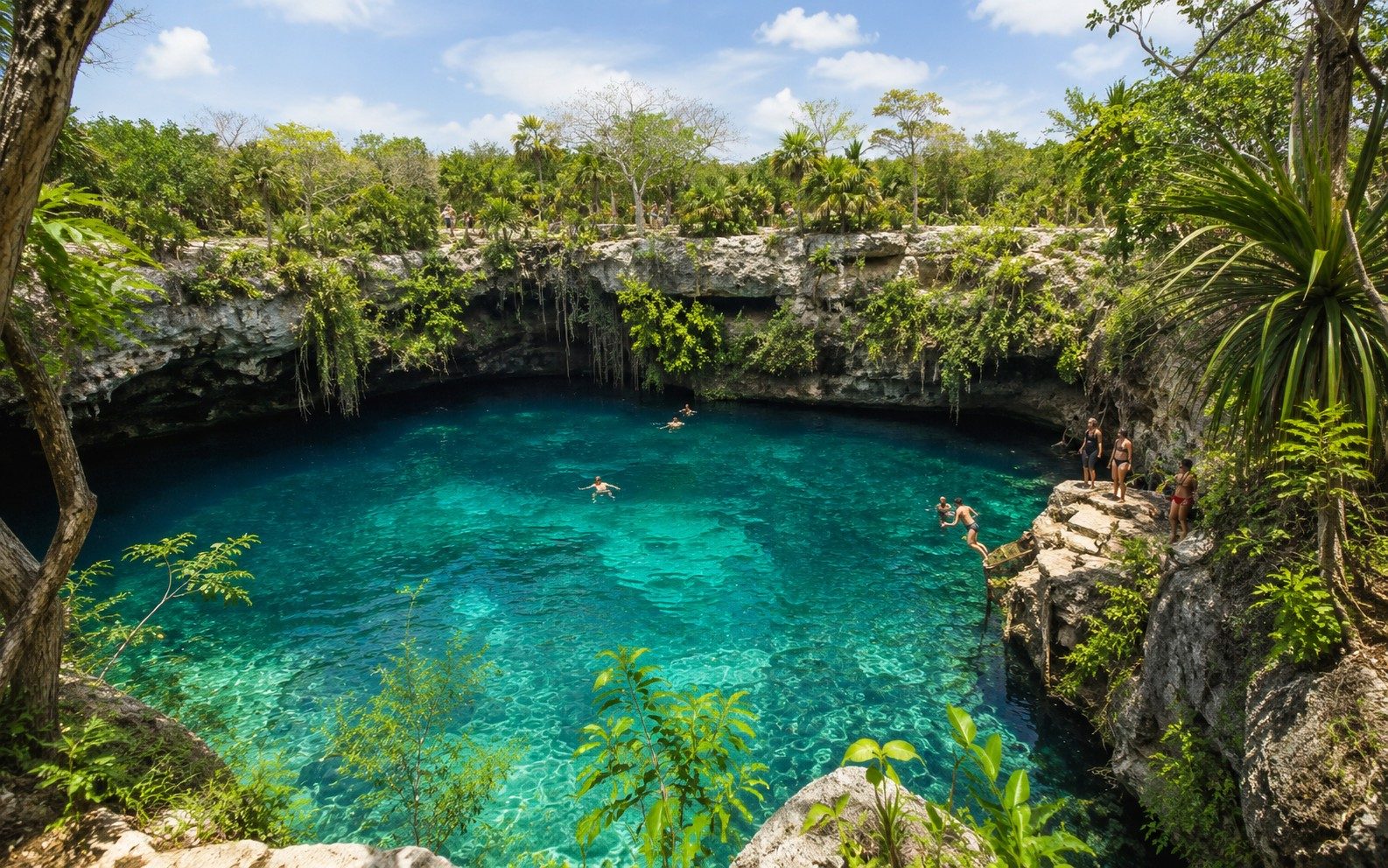
An open cenote has a large opening to the sky. You may see vegetation, birds, direct sunlight and a broad view of the swimming area.
This is often the type I would show someone who says, “I want to visit a cenote, but I do not like caves.”
But open does not mean shallow or easy. Some have deep water, steep walls or jumping platforms. Always check the actual entrance and exit.
Semi-open cenotes
Semi-open cenotes combine daylight with covered cavern sections.
These are often responsible for the dramatic photos with shafts of sunlight, but the exact look depends on time of day, weather, season and crowds.
Do not choose a cenote solely because one photograph captured perfect light at one moment.
Cave or enclosed cenotes
Most of the swimming area is beneath a rock ceiling. Expect a darker environment, echoes, artificial lighting in some venues and often more stairs.
For someone who enjoys geology, this can be the most memorable type. For someone with claustrophobia, fear of dark water or difficulty on stairs, it can be the worst choice.
Ask to see recent photos of the stairs and water entry—not just professional photos of the formations.
Which type is best for kids?
The label alone does not tell you.
A well-managed enclosed cenote with excellent stairs, child-size life jackets and attentive staff may be easier for a family than an open cenote with deep water and high platforms.
Choose for the actual child: swimming confidence, fear of darkness, stairs, supervision and how easily they can get out of the water.
See our Cenotes with Kids Guide for the full family checklist.
Which type is easiest for nervous swimmers?
Many nervous swimmers feel more comfortable when they can see the entire water area and the sky, which can make an open cenote a good starting point.
But access matters just as much. A secure staircase and obvious exit can be more reassuring than whether the roof is open.
Which type is best for older travelers or limited mobility?
Do not rely on words like “easy access.” Ask how many steps there are, whether handrails are continuous, how far the parking area is from the water and exactly how someone enters and exits.
A beautiful cenote is not worth forcing a traveler through an unsafe route.
Which type photographs best?
All three can.
Open cenotes give you sky, vegetation and reflections. Semi-open settings can produce strong light-and-shadow images. Cave cenotes show formations and scale.
Do not block stairs, cross barriers or hold up other swimmers for a photograph.
Cave swimming is not cave diving
Tourism language can be confusing. A venue may call itself a “cave cenote” even though ordinary visitors swim in a managed illuminated area.
Technical cavern and cave diving are completely different activities requiring specialized training and equipment. An open-water scuba certification does not mean you should independently enter an overhead cave environment.
How to translate cenote marketing language
When a venue says natural, ask what facilities are available.
When it says adventure, ask whether jumps, ziplines or difficult access are involved.
When it says family-friendly, ask about child life jackets, stairs and supervision.
When it says secret, remember that it may still be a commercial attraction with buses in the parking lot.
Practical details tell you more than adjectives.
How to choose a cenote near Cancun
Once you know which environment sounds right, use our Best Cenotes Near Cancun Guide to choose the region.
If you are considering Puerto Morelos, our Ruta de los Cenotes Guide explains how that area works.
Frequently asked questions
What type of cenote is best for a first visit?
If anyone is uneasy about enclosed spaces, start by comparing open or semi-open cenotes. Otherwise choose based on access, facilities and the experience you want.
Are cave cenotes safe for swimming?
Managed cave-style swimming areas can be appropriate for visitors when you follow the operator’s rules. Do not enter restricted cave passages.
Are open cenotes better for children?
Not automatically. Water depth, stairs, life jackets, staff and the child’s comfort matter more than the category.
Is a semi-open cenote the best of both?
It can be a great compromise for travelers who want a cavern atmosphere without feeling fully enclosed.
Which type is best for someone afraid of caves?
Usually start with an open cenote and check the actual water entry before going.
Accidental Gringo tip
Choose the cenote by asking, “What will this feel like when I am standing at the water?” That question is more useful than asking which one looks best in a photo.
Want help choosing quieter cenotes? The Hidden Cenotes of the Yucatán guide compares lesser-known options, access and route considerations, with embedded map links. MX$170 digital download.
Before you go: Cenote layouts vary widely, so confirm the venue's current stairs, life-jacket rules, accessibility and operating conditions if any of those affect your visit.