
Local travel guide
Responsible Cenote Travel: Protecting Water, Wildlife and Communities
Visit cenotes with respect for the connected aquifer, wildlife, local rules, community operations and fragile cave formations.
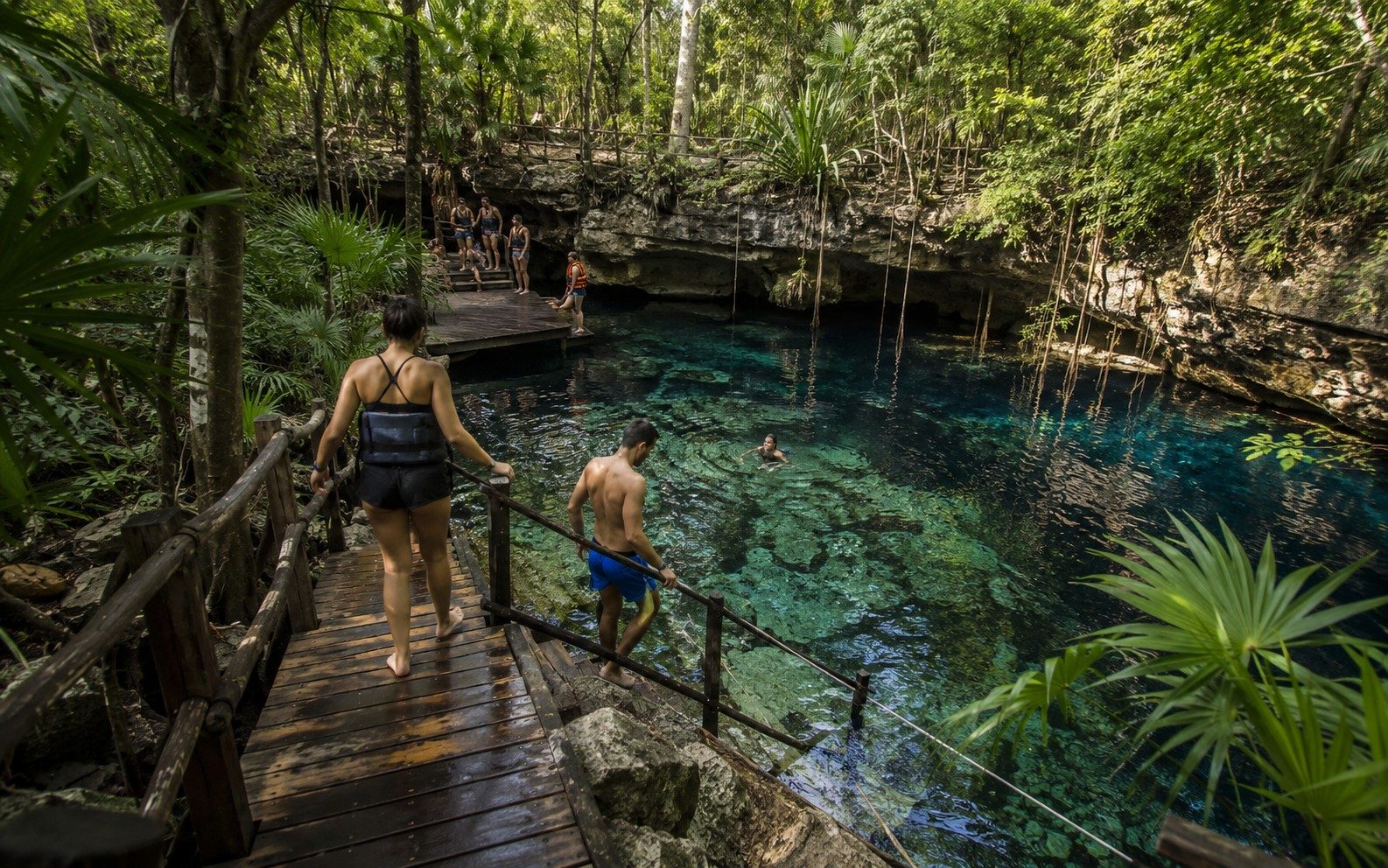
The water is connected
The Yucatán Peninsula has a highly permeable karst aquifer.
UNAM describes cenotes as visible windows into this underground water system. Pollutants can move through fractures and channels rather than remaining in one pool.
This is why shower, restroom and product rules matter.
Follow the shower rule
A pre-swim shower can remove sweat, lotion, sunscreen, makeup, oils, insect repellent and dirt.
Follow the venue’s current instruction.
Do not skip the shower because the product is marketed as natural, reef-safe or biodegradable.
Sunscreen and insect repellent
The most reliable water-protection approach is physical protection outside the water: hats, light clothing, shade and timing.
Insect repellent may be useful in jungle areas, but do not enter the water with it when the venue requires removal.
Plan when and where products will be applied.
Use the restroom
Cenotes are not isolated drainage basins.
Use the provided restroom before swimming. Do not relieve yourself in the water or jungle.
Families should schedule a restroom stop before fitting life jackets.
Reduce waste
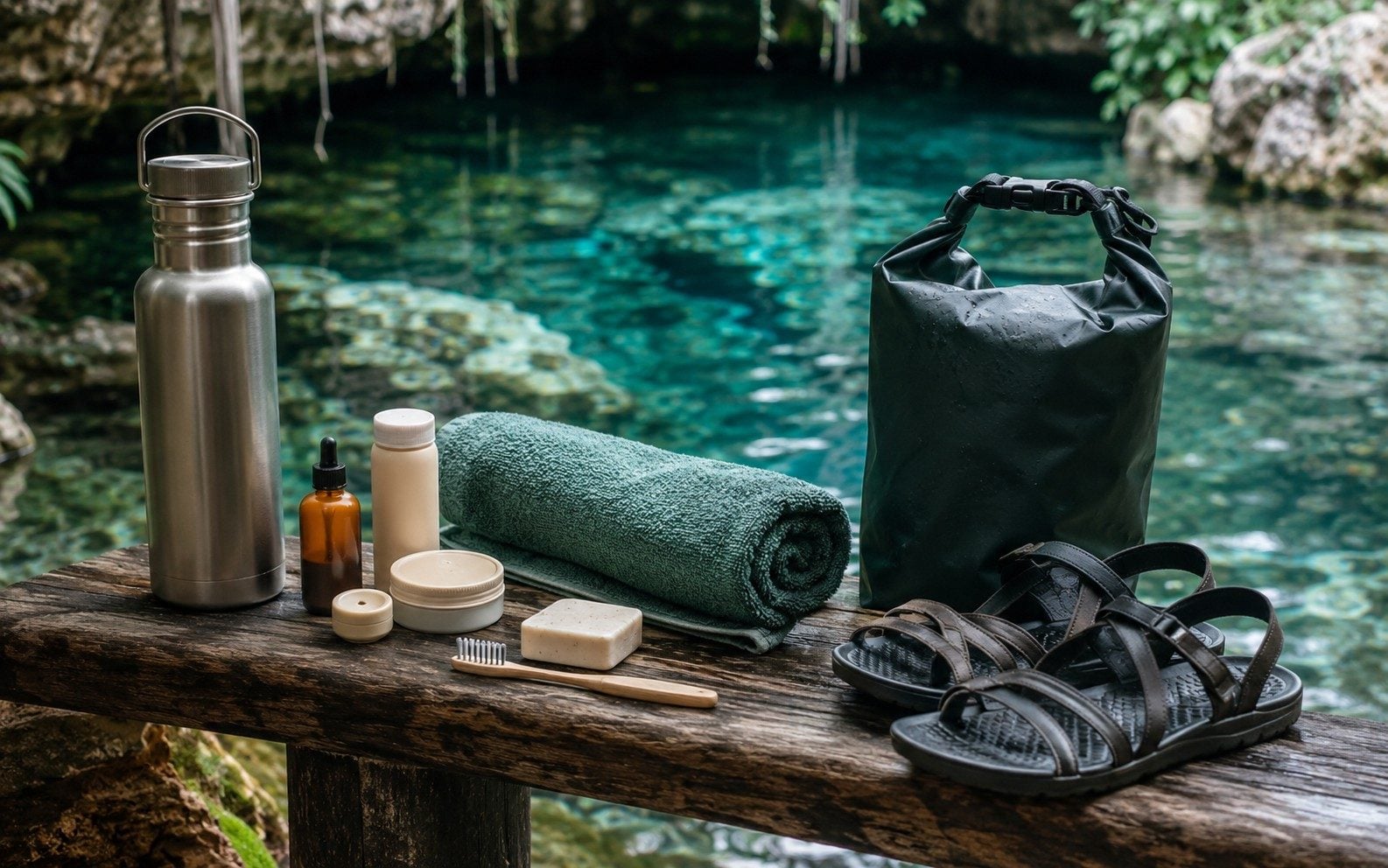
Bring a refillable water bottle where allowed, reusable wet bag, small day bag and minimal packaging.
Remove food wrappers, plastic, broken footwear, disposable ponchos, batteries and camera accessories.
Do not leave “biodegradable” waste. Food can attract wildlife and change animal behavior.
Stay on paths and platforms
Designated routes protect fragile edges, vegetation, cave formations, wildlife habitat, visitors from unstable surfaces and dive operations.
Do not cross a rope or barrier to improve a photograph.
Do not touch formations
Stalactites, stalagmites and other mineral formations develop slowly.
Touching can transfer oils, break fragile surfaces or encourage others to leave the route.
Divers must maintain excellent buoyancy and follow site procedures to avoid contact.
Wildlife
Cenotes and caves can support bats, fish, birds, insects, specialized aquatic species and microbial communities.
Observe without feeding, chasing, handling, loud disturbance, prohibited flash or entry into roosting and restricted areas.
A bat in a cave is not a prop.
Noise
Sound carries in enclosed spaces.
Keep speakers off and voices reasonable. Loud music changes the experience for wildlife, local guides and other visitors.
Photography
Ask before using a drone, tripod, flash, professional camera, underwater light or commercial equipment.
Follow fees and restrictions.
Do not ask a worker to ignore a rule for a tip.
Community-managed sites
Some cenotes are operated by families, ejidos, communities or small local businesses. Others are larger commercial parks.
Responsible behavior includes paying the stated admission, respecting community boundaries, using authorized visitor areas, asking before photographing workers or residents and not entering after hours.
Avoid romantic claims about a community or Maya spirituality unless the source and context support them.
Cultural respect
Cenotes have historical and cultural importance in Maya regions.
Do not present every cenote as a generic “gateway to the underworld” or repeat a guide story as settled fact.
Use careful language: some cenotes were important water sources, some had ritual significance, archaeological evidence differs by site and living Maya communities are not scenery from the past.
Choosing an operation
Look for a clear entrance, posted rules, staff, defined swimming area, flotation procedures, restrooms, waste management, emergency planning, honest access information and respect for capacity.
A polished website does not prove good environmental practice, and a small operation is not automatically responsible. Evaluate visible procedures.
Capacity and crowding
When a venue is crowded, wait for the stairs, limit photo time, do not push into the water, follow timed entry, respect closures and choose another day when possible.
Capacity limits protect both visitors and the site.
Diving responsibility
Cave and cavern divers must protect formations and sediment through correct training, buoyancy, trim, guideline discipline, appropriate group size and site-specific procedures.
Photography should not override dive safety or conservation.
Google Maps
General regional search: https://www.google.com/maps/search/?api=1&query=Cenotes+Yucatan+Peninsula
Use official contact information before entering a site. A map pin does not establish public access.
Accidental Gringo tips
- Shower without arguing about product labels.
- Carry out every item.
- Ask before photographing people.
- Keep speakers off.
- Stay behind barriers.
- Choose an operation with clear procedures.
Warnings
Do not enter a cenote after hours, through private land or around a closure.
Do not touch cave formations, feed wildlife or enter restricted water.
Common mistakes
- Assuming clear water cannot be polluted.
- Treating an old map pin as permission to enter.
- Using “biodegradable” as permission to ignore the shower rule.
Frequently asked questions
Why do cenotes restrict sunscreen?
Product rules are intended to reduce substances entering a vulnerable groundwater system. Follow the current venue rule.
Are all cenotes sacred?
Cenotes have varied historical, practical and ritual contexts. Avoid making one universal claim for every site.
How can I identify a responsible venue?
Look for clear rules, safe access, staff, restrooms, waste procedures, defined visitor areas and transparent information.
Verification notes
Last reviewed: July 14, 2026
Environmental practices vary among venues and municipalities. Groundwater guidance is based on UNAM information about the Yucatán Peninsula aquifer.
Needs Review before publication updates: Venue product rules, environmental certifications, operator ownership, community-management claims, capacity limits and local regulations.