
Local travel guide
Holbox Whale Shark Tours 2026: Season, Rules, Seasickness and What to Expect
Understand the official season, provider authorization, federal wildlife rules, open-water boat conditions, children, health concerns and no-sighting risk.
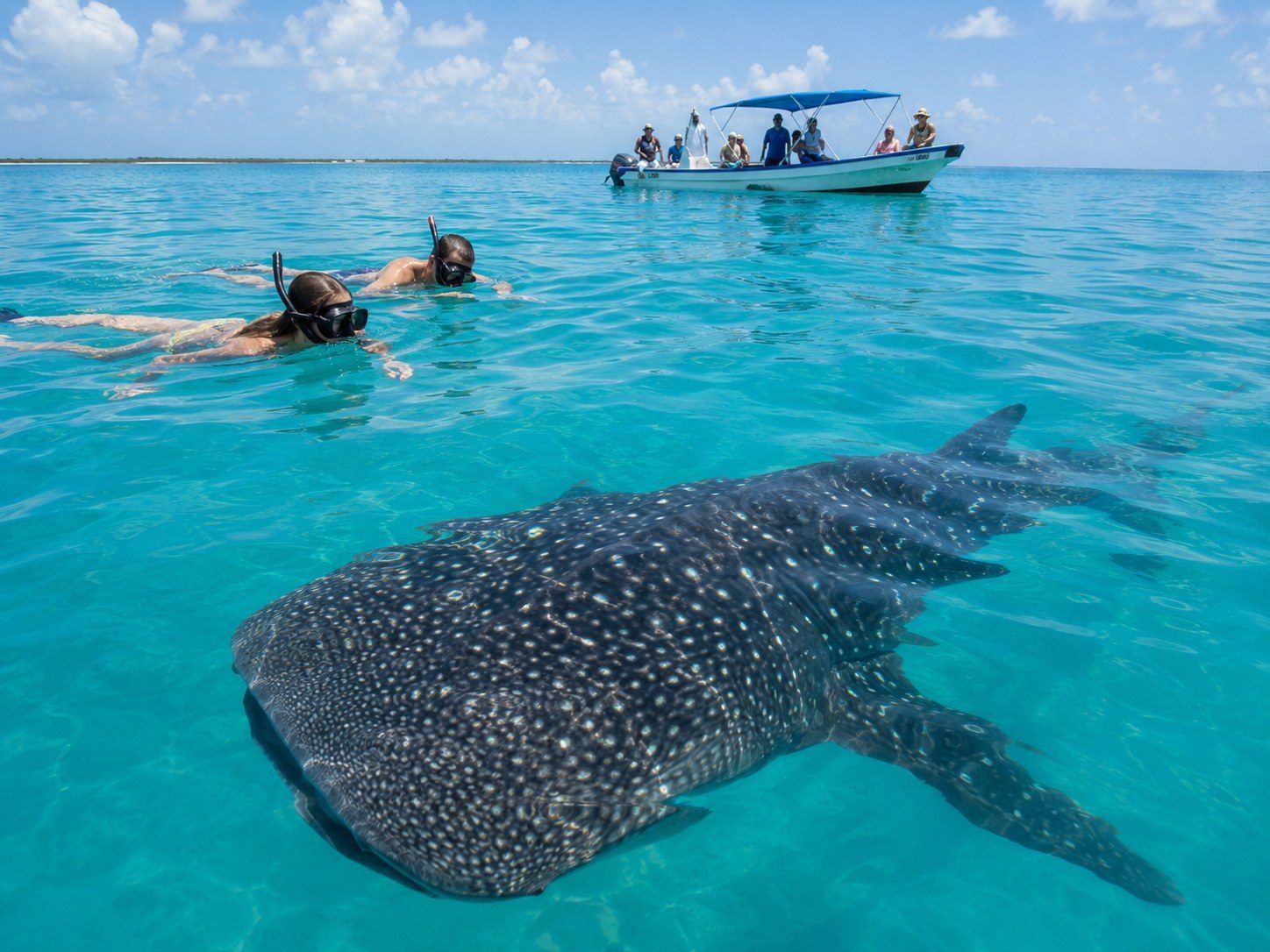
Is this really a Holbox whale shark tour?
It is commonly sold that way because Holbox is a major departure base, but the actual wildlife encounter takes place offshore in authorized aggregation areas of the northern Mexican Caribbean.
That matters because the boat ride can be a large part of the day. A traveler who is comfortable snorkeling from a beach may still find several hours of open-water travel, sun and motion physically demanding.
If you are still deciding whether Holbox fits the trip, start with our Holbox First-Timer Guide and Holbox Day Trip vs Overnight Guide.
2026 season: verify the official notice
SEMARNAT’s current management material includes the Mexican Caribbean whale-shark plan for the 2025, 2026 and 2027 seasons and a separate 2026 season notice.
The federal whale-shark standard requires official season notices to define authorized zones, season timing and other operational details.
For that reason, this guide intentionally does not hard-code a season start/end date until the exact 2026 notice is independently verified for publication.
Why the activity is regulated
Whale sharks are protected wildlife, and observation/swimming activity is governed by federal rules intended to reduce disturbance to the animals and their habitat.
The practical principle is simple: you are entering the animal’s environment, not bringing the animal into your activity.
Follow the authorized guide immediately. Do not touch, chase, feed, block, surround or deliberately disturb a whale shark. Do not enter the water until instructed, and do not separate from the guide just to get a better photo.
Use an authorized operator
Before paying, ask direct questions:
- Are the provider and vessel currently authorized for this activity?
- Where exactly is the departure point?
- What is included in the total price?
- Are conservation or protected-area fees included?
- What happens if the port closes?
- What happens if no whale shark is found?
- Can the trip be moved to another day?
- What are the current age, health and swimming requirements?
A responsible operator should be able to explain the rules instead of treating them as an inconvenience.
What the day actually feels like
Expect an early start and a long day.
Depending on the departure point and where wildlife is located, the outing may include:
- early check-in and briefing
- equipment fitting
- extended open-water travel
- search time
- waiting for controlled entry instructions
- brief wildlife encounters rather than unlimited swimming
- strong sun exposure
- limited restroom options
- changing sea conditions on the return
Do not put a tight ferry, airport transfer or important evening reservation immediately afterward.
Seasickness is a real part of the decision
If you are prone to motion sickness, take that seriously before booking. This is not necessarily a short ride in protected water.
Ask the operator about typical time offshore and what the boat setup is like. If you normally use motion-sickness medication, follow your own medical guidance.
Hydration, sleep and eating appropriately before departure can matter just as much as enthusiasm.
Can you swim if you are not a strong swimmer?
Tell the operator your actual swimming ability before paying.
Flotation equipment can help, but it does not automatically make every traveler comfortable in open ocean conditions. Saltwater, waves, masks and the pressure of entering when instructed can feel very different from a hotel pool.
It is completely reasonable to remain on the boat if conditions or your comfort level change.
Children
Do not assume a child is eligible just because they can swim.
Confirm the current operator and regulatory age/participation rules, child-size flotation availability and whether the child can comfortably follow wildlife and safety instructions.
A child who is anxious in open water should not be pressured into participating because the family already paid.
How close do you get to a whale shark?
The goal is not to get as close as possible.
Current operating rules control how swimmers and boats approach the animals. Follow the guide’s instructions and keep the required distance.
The better mindset is: can you observe a wild whale shark without changing what it was doing?
Are sightings guaranteed?
No. These are wild animals.
An authorized season tells you when the activity may operate. It does not guarantee where animals will be on your specific day.
Before paying, ask exactly what happens if no whale shark is found. Policies vary.
What if the port closes?
Marine authorities can restrict or stop operations when conditions are not safe.
That is not a bad operator ruining your vacation. It is a safety decision.
This is one reason I prefer staying long enough in Holbox to allow a second possible day if the whale-shark outing is a major reason for the trip.
How many nights should you stay if whale sharks are a priority?
I would not build a one-night Holbox visit around one weather-dependent wildlife trip.
Two nights: possible if the schedule lines up well.
Three nights: more comfortable when this activity is a major priority because you have more weather flexibility.
See our Holbox Day Trip vs Overnight Guide.
Getting to and from the tour
Confirm the exact meeting point the night before.
If you are coming to Holbox from Cancun, understand the mainland + ferry + island transfer before committing to a departure time.
Use our Cancun to Holbox Guide and Chiquila to Holbox Ferry Guide.
What to bring
Follow the operator’s current instructions, but typical essentials include:
- sun-protective clothing
- hat for boat time
- water
- dry bag or waterproof pouch
- necessary medication
- small towel or dry layer
- only the valuables you actually need
Follow current rules regarding sunscreen and skin products in the wildlife area.
How to choose between two whale shark tours
I would compare these before price:
- current authorization
- boat condition and safety setup
- group size
- guide communication
- cancellation/no-sighting terms
- what fees are included
- how they explain wildlife rules
A tour that promises the closest encounter is not automatically the better tour.
Frequently asked questions
When is whale shark season in Holbox in 2026?
SEMARNAT has a 2026 Mexican Caribbean season notice under the current management framework. Verify the exact official 2026 dates before booking because season timing is set by the current notice.
Are whale shark sightings guaranteed?
No. Wildlife movement and sea conditions vary.
Do I need to be a strong swimmer?
You should be honest about your open-water comfort. Flotation may be used, but the operator’s current participation rules and sea conditions still matter.
Is the boat ride rough?
It can be. The trip may involve extended open-water travel, and conditions vary by day.
Can kids go on a Holbox whale shark tour?
Possibly, depending on current age, health and operator rules. Confirm those details before paying.
Accidental Gringo tip
If whale sharks are one of the main reasons you are going to Holbox, buy yourself time flexibility, not just a tour ticket. A second possible day is more valuable than choosing the cheapest nonrefundable departure.
Before you book: Whale-shark trips are seasonal and regulated. Confirm the current season dates, authorized operator status, fees, port conditions, participation rules and wildlife conditions directly for your travel date before paying.