
Local travel guide
The History of Akumal: From Maya Coast to Diving Community and Marine Refuge
Akumal’s modern identity grew from an older Maya coastal landscape, a twentieth-century diving community, and decades of marine conservation.
A Maya coastal landscape
The name Akumal is widely translated from Maya as “place of the turtles.” Long before modern tourism, the eastern Yucatán coast was part of an interconnected Maya world of coastal settlements, fishing areas, trade routes, and ceremonial places.
Small archaeological remains in the wider region show that this coastline was not empty before twentieth-century development. However, visitors should be cautious about romantic legends presented without archaeological evidence. Akumal’s pre-Hispanic history is part of the broader Maya coastal landscape, but not every modern story repeated by a guide or hotel should be treated as verified fact.
Coconut plantation and remote coastline
Before the modern community was founded, the area included coconut plantation land and was difficult to access compared with today. Highway 307, large resorts, and the major urban centers that now define the Riviera Maya did not yet exist in their current form.
The coast was reached primarily by water or rough tracks, and the reefs that now attract snorkelers were known to divers and explorers long before mass tourism arrived.
The founding of modern Akumal
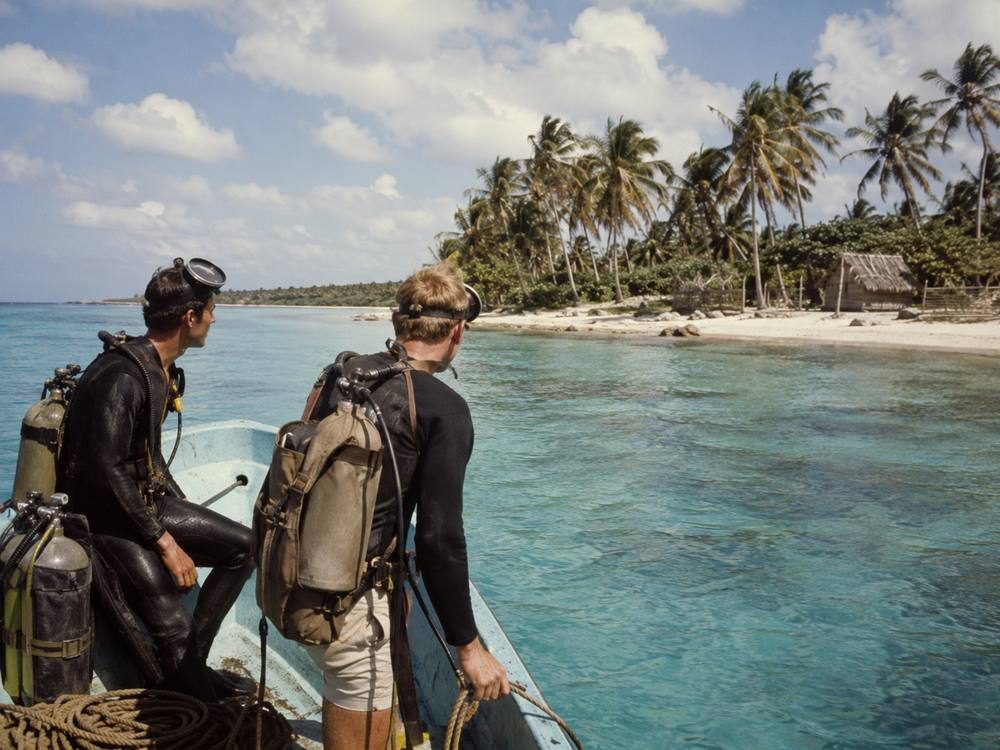
The modern Akumal community is generally dated to 1958. Pablo Bush Romero and members of the Club de Exploración y Deportes Acuáticos de México, known as CEDAM, were drawn to the area for diving and underwater exploration.
Akumal developed as a community for divers before Cancún was built as a large planned tourism center. This is an important part of its identity. The earliest tourism was tied more closely to the sea, boats, reefs, and small-scale lodging than to the all-inclusive resort model that later spread along the coast.
Growth brought opportunity and pressure
As roads improved and Riviera Maya tourism expanded, Akumal became easier to reach. Hotels, restaurants, vacation homes, resorts, dive shops, and tours grew around the bays.
The same natural features that attracted visitors also became vulnerable to visitor pressure. Seagrass beds, coral, nesting beaches, water quality, and marine animals can be harmed by overcrowding and poor management.
Akumal’s story therefore became a conservation story as well as a tourism story.
The role of local conservation
The Centro Ecológico Akumal, a nonprofit organization, has worked on environmental monitoring, education, ecosystem management, and sea-turtle conservation in Akumal and surrounding areas.
Local organizations, researchers, residents, tourism operators, and government agencies have not always agreed on every access or management question. That tension is part of the real history of a place trying to balance public access, livelihoods, private property, tourism, and ecological protection.
Federal protection of the bay
In 2016, the Mexican government established Bahía de Akumal as an area of refuge for the protection of marine species. A formal protection program followed in 2017.
The program recognized the importance of the bay’s turtles, seagrass, coral, and other marine life. It set rules for activities, designated use areas, and created controlled wildlife-observation procedures.
For visitors, those rules can feel restrictive compared with an ordinary beach. Historically, however, they represent the latest stage in Akumal’s evolution: from remote coastline, to diving settlement, to internationally known wildlife destination.
Why the history matters
Akumal was not created by turtle tourism alone. Its identity combines Maya heritage, coastal livelihoods, diving culture, migration, development, and conservation.
Understanding that history changes the way a traveler sees the bay. The water is not merely a backdrop for vacation photographs. It is the reason the community formed, the foundation of much of its economy, and the habitat that must survive for Akumal’s future.
Practical tip
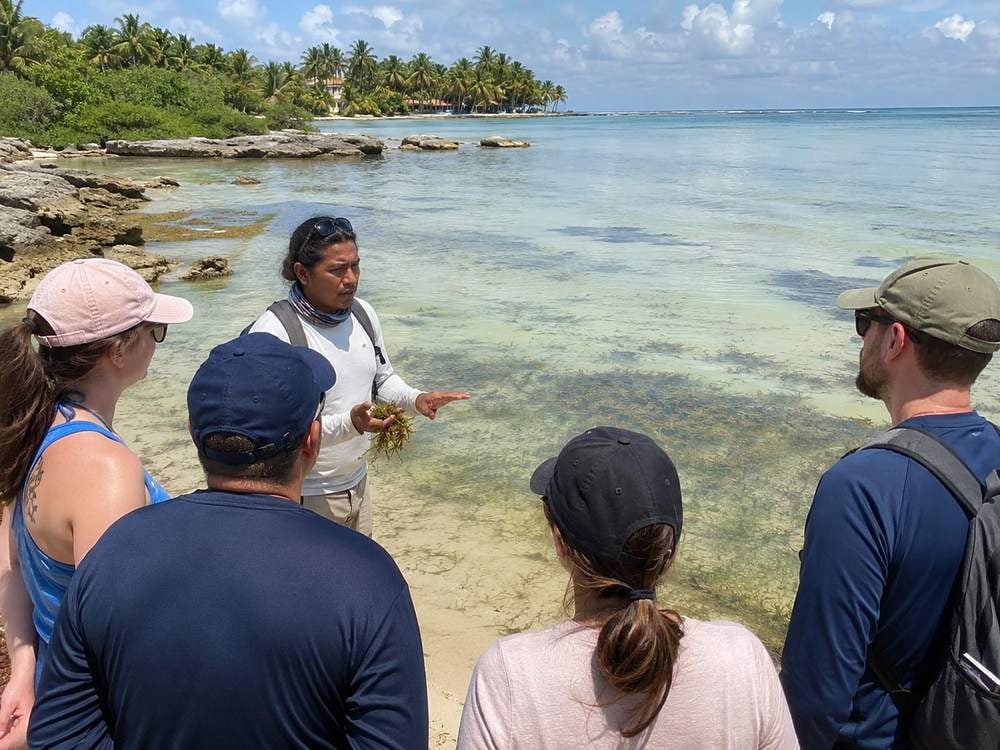
Visit Akumal Pueblo as well as the coast. Murals, local businesses, and community spaces add context that cannot be seen from a resort beach.
Three common mistakes
- Treating “place of the turtles” as the complete history of Akumal.
- Repeating legends as verified Maya history.
- Assuming conservation rules appeared only to inconvenience visitors.
Frequently asked questions
When was modern Akumal founded?
The modern tourism and diving community is generally dated to 1958.
Was Akumal developed before Cancún?
Yes. Akumal’s modern tourism community predates Cancún’s large planned development.
Why is Akumal Bay protected?
The bay contains important marine habitat, including seagrass feeding areas used by turtles, along with coral and other species.
Verification notes
Verified foundation: Akumal is located between Playa del Carmen and Tulum; Bahía de Akumal is a federally protected marine refuge; the official protection framework regulates wildlife-observation activity; Akumal’s modern diving community dates to 1958; and Centro Ecológico Akumal works on local environmental management and conservation.
Needs Review before publication: Any specific archaeological claims, dates beyond the established 1958 founding narrative, and historical details not supported by primary records.
Core research sources consulted:
- Mexico’s Diario Oficial de la Federación: Bahía de Akumal refuge decree and protection program
- Comisión Nacional de Áreas Naturales Protegidas (CONANP)
- Centro Ecológico Akumal
- Akumal historical and diving-community references
- Current destination and operator pages used only for orientation, not as sole authority for changing rules or prices