
Local travel guide
Chichén Itzá with Kids: A Family Planning Guide
Plan a Chichén Itzá family visit with realistic advice for heat, strollers, walking, guides, meals, transportation, cenotes and age-appropriate expectations. Build a day that respects the site without exhausting children.
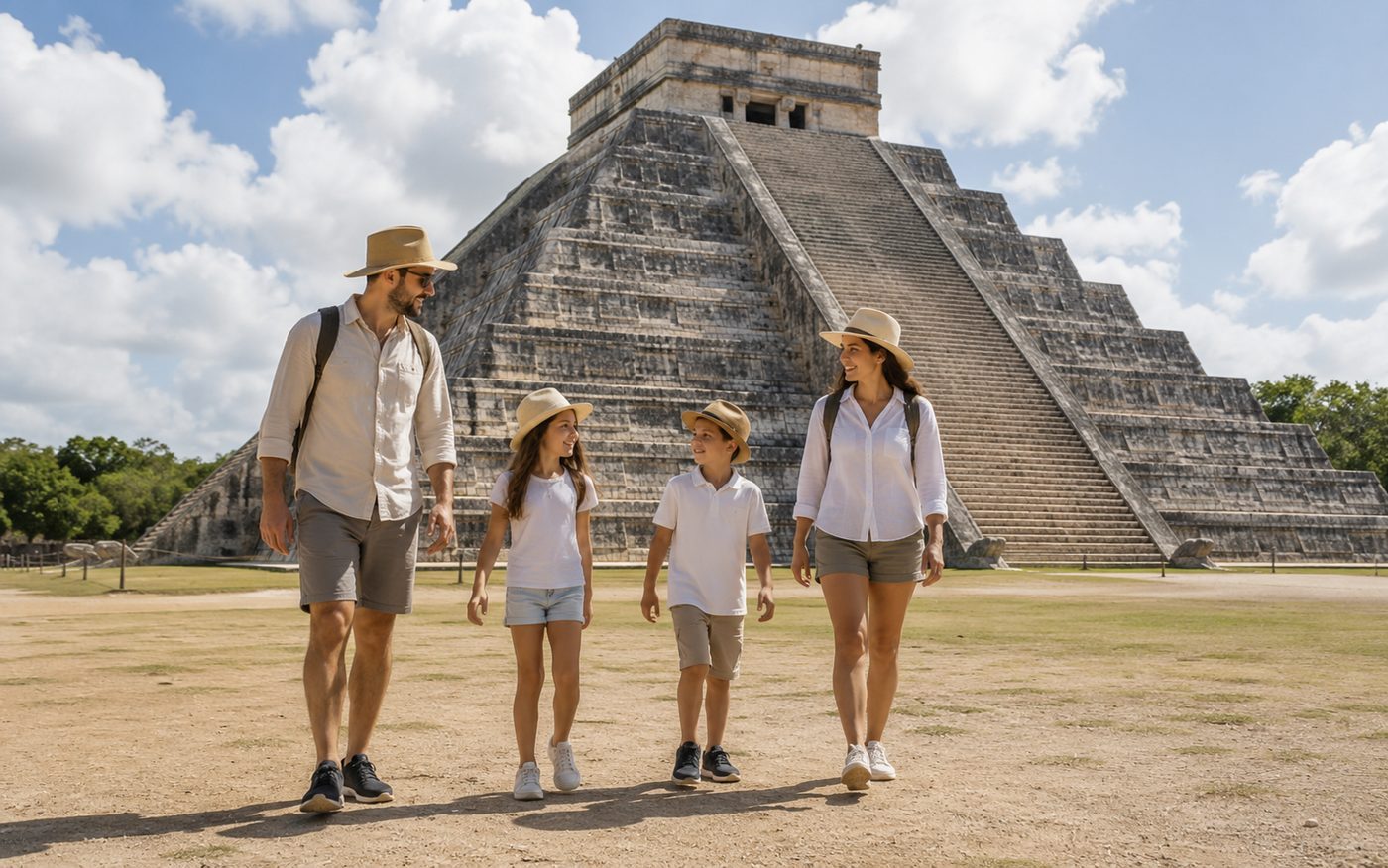
The day is longer than the site visit
Families should count:
- Hotel pickup
- Regional driving
- Entrance procedures
- Several hours outdoors
- Lunch
- Optional swimming
- The return trip
A child who enjoys the first hour may still struggle after a long morning in a vehicle and a delayed meal.
Choosing transportation
Private transportation
Often easiest with:
- Car seats
- Stroller
- Diaper bag
- Multiple children
- Different nap needs
- A grandparent or family member who walks slowly
Confirm child seats in writing. “Available on request” is not the same as confirmed.
Organized tour
Can work well for school-age children and teenagers who handle long group days.
Ask:
- How many hotel pickups occur?
- How much time is inside the site?
- Is the guide family-friendly?
- When is lunch?
- How long is the cenote stop?
- What time does the group return?
Rental car
Provides flexibility, but one adult carries the responsibility for navigation and the return drive.
The family route
A simple route can include:
- El Castillo and the main plaza
- Great Ball Court
- Temple of the Warriors and columns
- One optional extension: Sacred Cenote or southern group
Do not make the longest walk mandatory. Let the child’s energy decide the extension.
Explaining the site to children
Focus on questions:
- How did people build with limestone?
- Why are the plazas so large?
- What details repeat in carvings?
- How does the ball court sound?
- Why were cenotes important in a dry limestone landscape?
Avoid turning disputed stories into facts. A guide can say, “Archaeologists interpret this in several ways,” without making the experience less interesting.
Should families hire a guide?
A good guide can reduce information overload by choosing a few memorable ideas.
For children, request:
- Interactive style
- Short explanations
- Visual details
- Breaks
- A route under two hours before free time
A private or small-group guide may adapt more easily than a large coach group.
Strollers
A stroller can save energy, but the site is not a smooth urban walkway.
Choose:
- Larger wheels
- Sun canopy
- Simple folding mechanism
- Storage that does not overload the stroller
A lightweight umbrella stroller may be easy to transport but harder on rough surfaces. A heavy all-terrain stroller may handle paths better but be difficult in a bus or van.
Babies and toddlers
Priorities include:
- Heat protection
- Feeding schedule
- Diaper changes
- Nap plan
- Carrier safety
- Vehicle car seat
Baby carriers can become very warm for both adult and child. Use shade and monitor heat closely.
School-age children
Give them a role:
- Find repeated serpent imagery
- Photograph three different column styles
- Compare the ball court with a modern sports space
- Mark the route on a map
- Ask the guide one question
The goal is observation, not memorizing dates.
Teenagers
Teenagers may engage more when they choose a focus:
- Photography
- Architecture
- Maya writing
- Astronomy claims and evidence
- Tourism and heritage protection
- Mapping
Give them some independent looking time within the family’s agreed meeting plan.
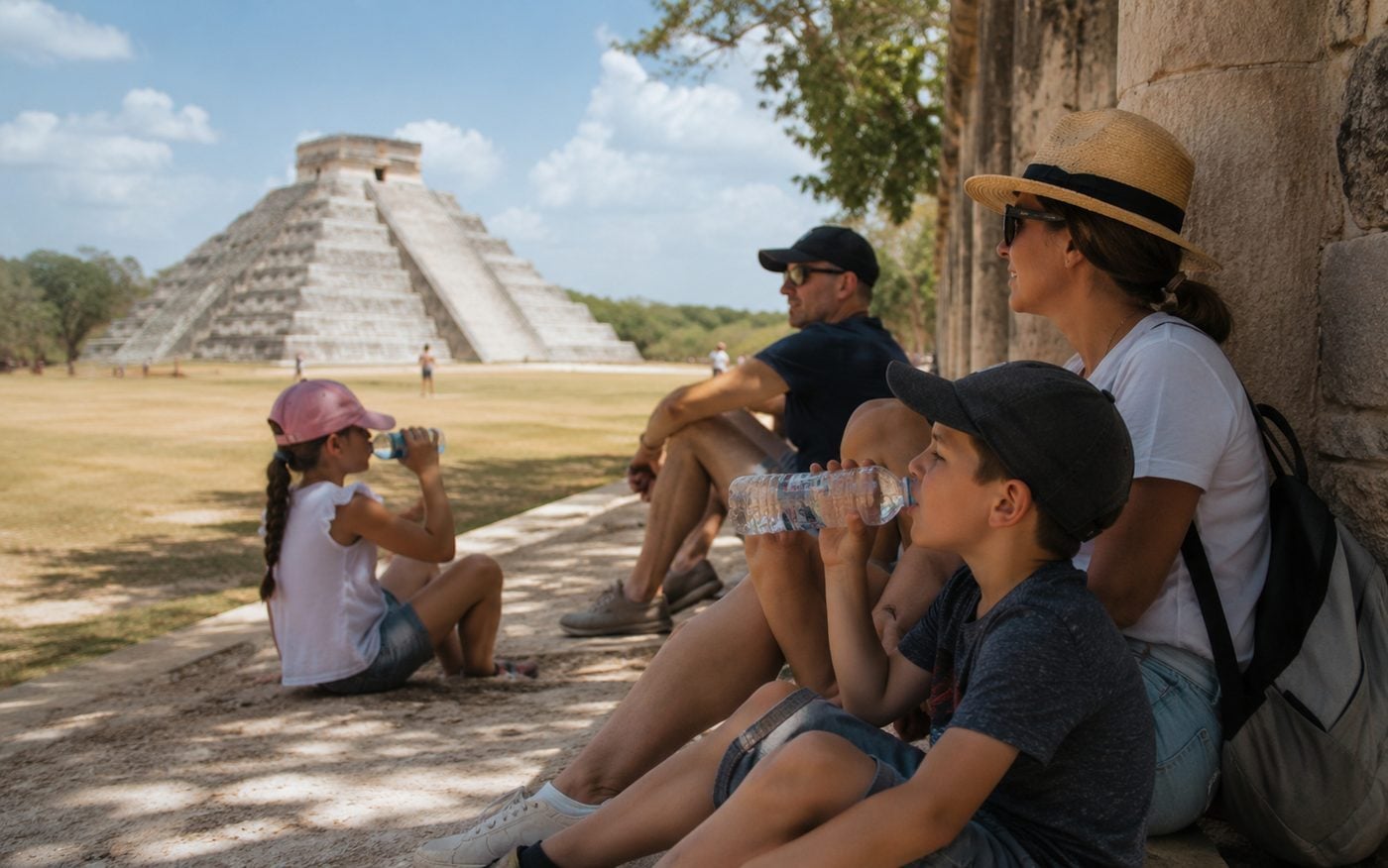
Heat and hydration
Children may not report overheating early.
Watch for:
- Unusual quietness
- Irritability
- Headache
- Dizziness
- Nausea
- Stumbling
- Very hot skin
Move to shade, hydrate and seek assistance when needed. Do not push through symptoms to complete the route.
Meals and snacks
INAH lists outside food as prohibited in the archaeological area. Plan a meal before or after the site portion and confirm how an organized tour handles children’s food needs.
Carry any permitted essential infant or medical items according to current entrance guidance and contact the site when special accommodation is needed.
Adding a cenote
A cenote can give children a second kind of experience, but it also adds changing, stairs, water rules and more time.
Choose based on:
- Safe access
- Life-jacket policy
- Water depth
- Supervision
- Changing facilities
- Restrooms
- Meal availability
- Current operating status
Never assume a natural swimming site functions like a resort pool.
Google Maps
- Chichén Itzá: https://www.google.com/maps/search/?api=1&query=Chichen+Itza+Archaeological+Site
- Visitor center: https://www.google.com/maps/search/?api=1&query=Centro+de+Atencion+a+Visitantes+Chichen+Itza
- Valladolid: https://www.google.com/maps/search/?api=1&query=Valladolid+Yucatan+Centro
Save the vehicle or bus location before entering.
Accidental Gringo tips
- Let children choose one photograph they want to recreate.
- Schedule the main explanation before fatigue.
- Carry spare clothing in the vehicle.
- Keep the afternoon optional.
- Do not promise a cenote until you know the family has enough energy.
- Use a private pace for multigenerational groups when possible.
Warnings
Children must remain behind barriers and cannot climb structures.
Natural cenotes require direct adult supervision even when life jackets are used.
Common mistakes
- Planning an adult-length route for a preschool child.
- Delaying water and lunch to maintain the schedule.
- Choosing a tour without understanding the total day length.
Frequently asked questions
Is Chichén Itzá suitable for toddlers?
It can be, but the visit should be short, early and flexible. Transportation and heat are the main planning challenges.
Can we bring a stroller?
A sturdy stroller may help. Expect uneven surfaces and confirm current entrance procedures.
How long should a family spend inside?
Many families do well with about two to three focused hours. Older children with strong interest may enjoy longer.
Is a cenote necessary?
No. It is an optional second experience, not a requirement for a successful day.
Verification notes
Last reviewed: July 14, 2026
The stable planning guidance in this article is based primarily on official INAH and UNESCO information. Admission prices, opening hours, special-event procedures, guide availability, transportation schedules, parking arrangements and temporary access restrictions can change.
Check the official sources again shortly before publication and before travel:
- INAH Chichén Itzá visitor page: https://www.inah.gob.mx/zonas/146-zona-arqueologica-de-chichen-itza
- Lugares INAH Chichén Itzá services and rules: https://lugares.inah.gob.mx/en/node/5663
- Government of Yucatán Boleto Único announcement: https://www.yucatan.gob.mx/saladeprensa/ver_nota.php?id=10762
- UNESCO World Heritage listing: https://whc.unesco.org/en/list/483/
Needs Review before future publication updates: Any exact price, schedule, transportation departure, parking fee, authorized-guide rate, special-event access procedure, temporary closure or route restriction.