
Local travel guide
Chichén Itzá Visitor Guide: What to Know Before You Go
Plan a respectful, realistic visit to Chichén Itzá from Cancún or the Riviera Maya. This guide covers admission planning, site rules, heat, walking conditions, accessibility, guides, time zones and how much time to allow.
Why the visit needs advance planning
Chichén Itzá is near Pisté in Yucatán, several hours from most Cancún and Riviera Maya hotels once pickup, traffic and stops are included. A realistic day may involve:
- Travel from the hotel to a pickup point or terminal
- A long regional drive
- Admission and security procedures
- Two and a half to four hours of outdoor walking
- Strong sun and limited shade in open areas
- Meals, restrooms and optional Valladolid or cenote stops
- A long return journey after an active day
A tour that advertises several destinations may spend less time inside the archaeological zone than an independent visit. Confirm the actual site time before booking.
Opening hours and admission
INAH publishes the official public operating information for Chichén Itzá. Opening hours, last-entry time, admission components, payment procedures and special operations can change. Equinox periods, holidays, maintenance, severe weather and security procedures may create different conditions.
Before leaving your hotel, verify:
- The current public opening and closing times
- The last entry time
- The current combined admission total
- Identification needed for any reduced category
- Whether your tour includes the full admission charge
- Current payment methods
- Any temporary route or structure closures
Do not rely on an old social-media post or a tour advertisement for the current government admission price.
What you can see
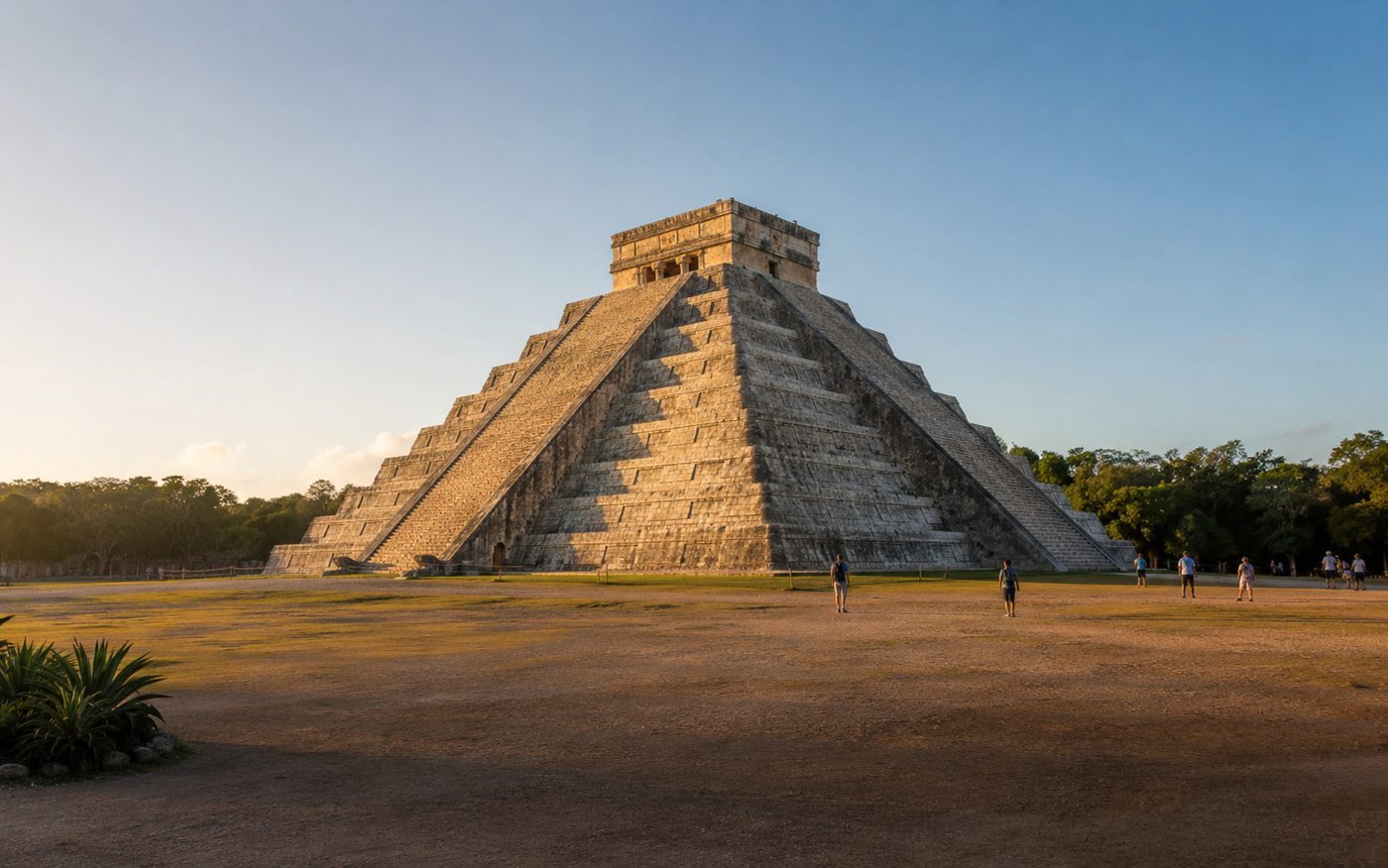
El Castillo is the best-known monument, but it is only one part of the site. A first visit may include designated views of:
- El Castillo, also called the Temple of Kukulcán
- The Great Ball Court
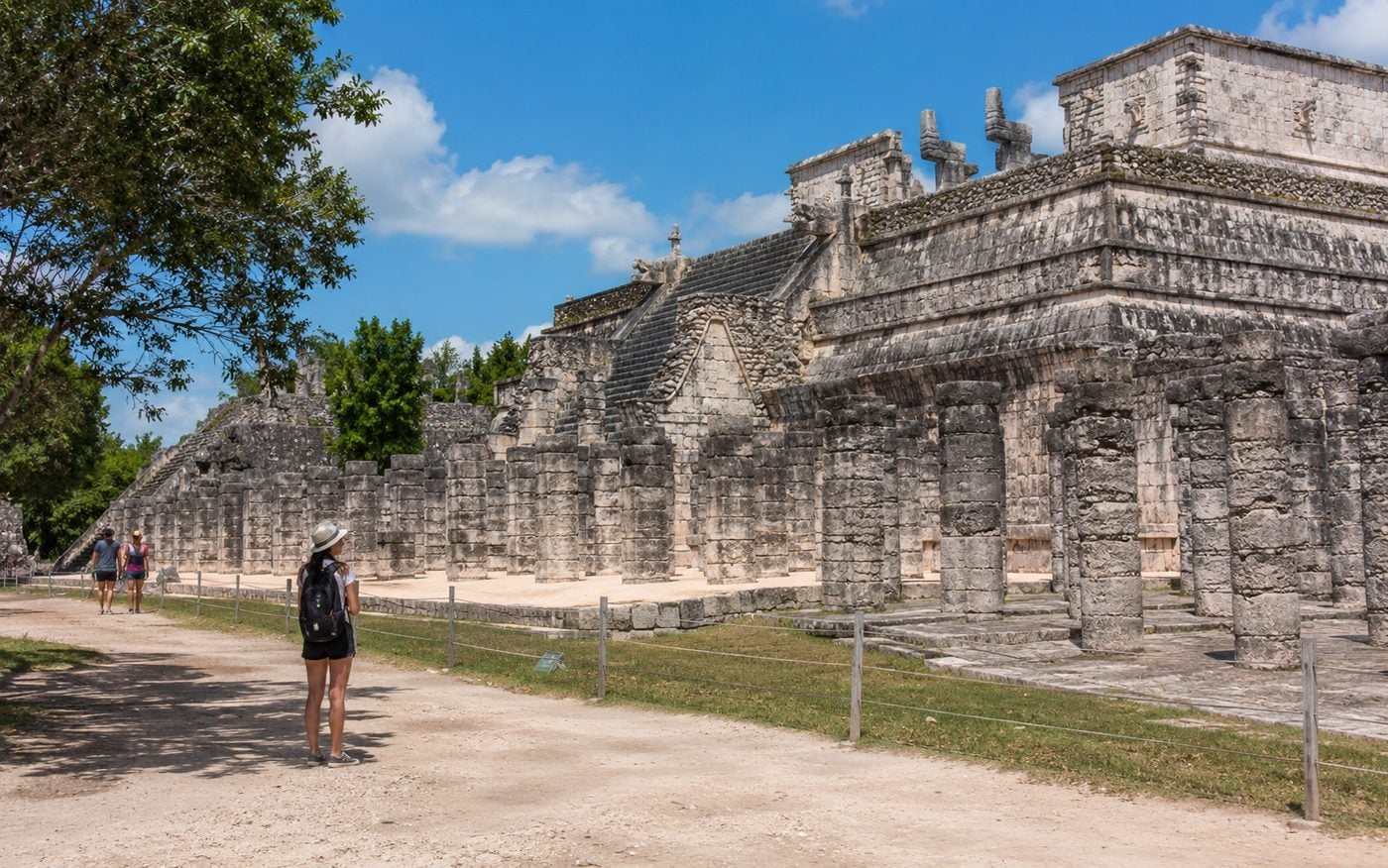
- The Temple of the Warriors
- The Group of the Thousand Columns
- The Sacred Cenote route
- El Caracol
- Las Monjas and La Iglesia
Access can change for conservation or crowd management. Stay on marked routes and do not cross barriers even when another visitor does.
A practical first-time route
Start in the main plaza around El Castillo, then continue to the Great Ball Court. Decide whether the additional walk toward the Sacred Cenote fits the heat and mobility level of your group. Return through the Temple of the Warriors and columns, then continue south toward El Caracol and Las Monjas when time and energy allow.
Travelers with limited time should identify their priorities before entering instead of walking randomly until they become tired.
Heat, shade and hydration
Much of Chichén Itzá is outdoors. Broad plazas can feel substantially hotter than shaded hotel grounds, and limestone surfaces reflect heat. Shade is available in some areas but not exactly where every traveler will want to stop.
Bring water, a brimmed hat, breathable clothing, sunscreen, sunglasses and comfortable walking shoes. Take a break before anyone in the group feels exhausted. Children, older adults and travelers unused to tropical heat may need a shorter route and more shade stops.
Walking conditions
Expect a mixture of compacted paths, grass, stone and uneven surfaces. The principal plaza is relatively open, while longer routes can add distance and more variable footing. Beach sandals and flip-flops are usually less comfortable than supportive walking shoes.
Allow more time when traveling with children, mobility equipment or anyone who needs frequent breaks.
Accessibility
Official visitor information lists accessibility services, but conditions vary across the site. The principal monument area may be more manageable than routes to outlying structures. Outdoor-capable wheelchairs and larger wheels can be helpful on uneven paths.
Travelers with specific mobility needs should contact the site and transportation provider before departure, confirm the accessible entrance and ask how much of the planned route is realistic.
Guides and transportation are different services
An organized-tour guide travels with a scheduled excursion. An on-site guide provides interpretation at the archaeological zone. A private guide may be arranged independently. A driver provides transportation and is not automatically qualified to provide archaeological interpretation.
Before hiring a guide, confirm the language, route, duration, group size, credentials and total fee. Ask which claims are supported by archaeology and which are interpretations, traditions or popular stories.
Site rules
Visitors should expect rules protecting both people and the monuments. Important restrictions normally include no climbing, no crossing barriers, no smoking, no pets, no food in protected areas and limits on professional photography equipment.
Personal photography and commercial production are not the same activity. Professional equipment, filming or drones may require advance authorization. Never assume aerial operation is allowed at an archaeological site.
Cancún and Chichén Itzá use different local times
Cancún and the Riviera Maya are in Quintana Roo. Chichén Itzá is in Yucatán and is one hour behind Cancún. This matters when a Cancún pickup, an on-site guide meeting and a return bus are booked separately.
Write the time zone beside each appointment. A phone may update automatically, while a watch or vehicle clock may not.
Google Maps
Navigate to the official archaeological-zone entrance or visitor center rather than selecting only the general town name. Download an offline map before leaving Cancún or the Riviera Maya.
Common mistakes
- Arriving near midday without enough water or sun protection.
- Allowing only enough time for a quick photograph of El Castillo.
- Assuming a driver, tour leader and archaeological guide are the same service.
Frequently asked questions
Can visitors climb El Castillo?
No. Visitors must remain in designated areas and follow barriers protecting the monuments.
How long should I spend at Chichén Itzá?
About 2½ to 4 hours works for many first-time visitors. Photography, detailed interpretation, mobility needs and longer routes may require more time.
Do I need a guide?
A guide is not required for a standard visit, but good interpretation can make the architecture and history easier to understand. Confirm credentials, language, route and price before the service begins.
Verification notes
Recheck the following before publication or travel: admission totals, opening hours, last entry, unified-ticket procedures, payment methods, parking, authorized-guide availability, temporary route closures, equinox procedures, evening-event status and current public-transport schedules.
Primary official source: INAH Chichén Itzá visitor information.