
Local travel guide
Cenote Safety Guide: Swimming, Snorkeling and Diving
Plan a safer cenote visit by separating ordinary swimming and snorkeling from jumping, freediving, cavern diving and cave diving. Learn what to confirm before entering the water.
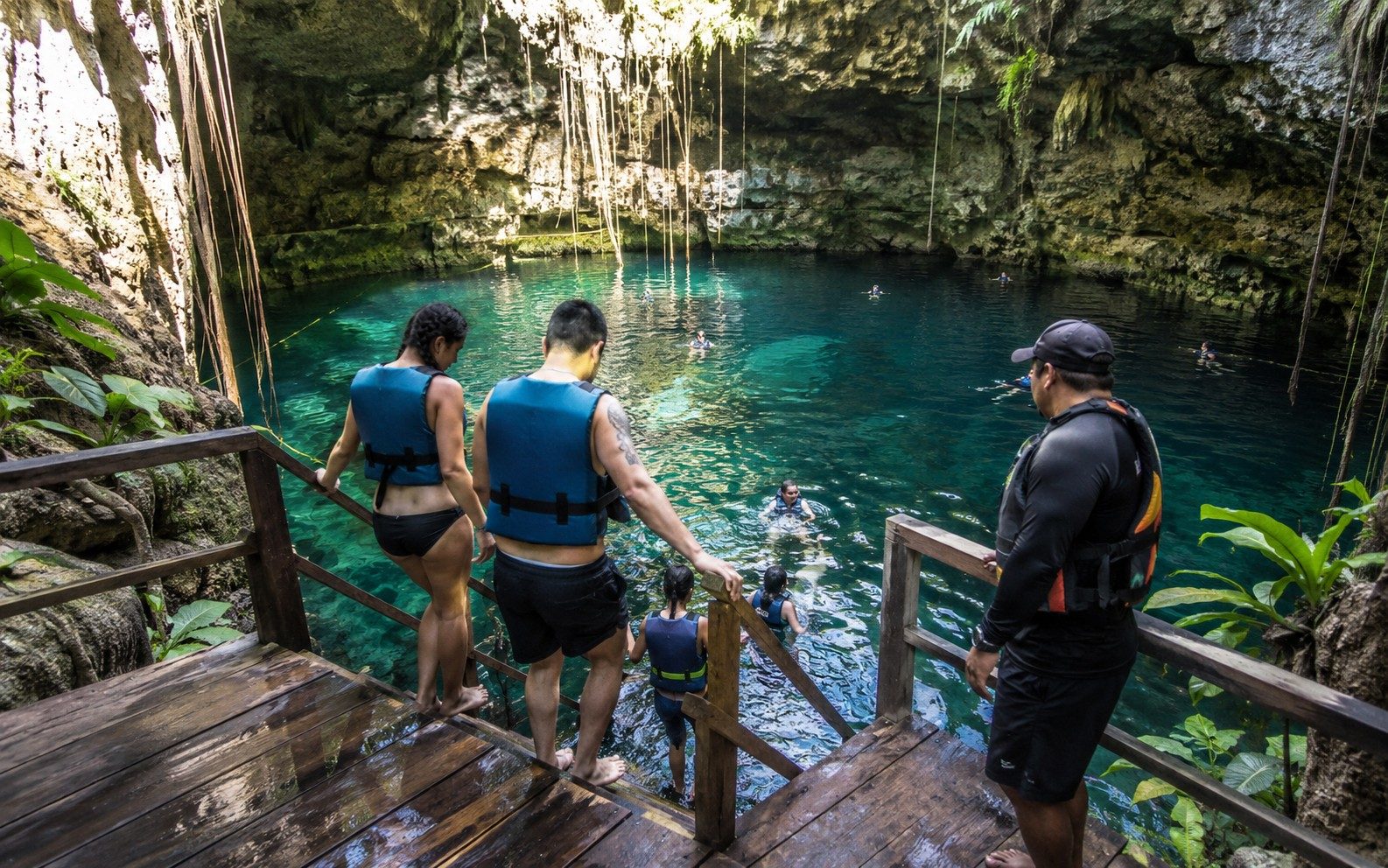
Before choosing the cenote
Ask the venue or tour provider:
- Is swimming currently open?
- Are life jackets required?
- Is a lifeguard or water attendant present?
- How deep is the swimming area?
- What is the entry and exit?
- Are non-swimmers allowed in the water?
- Are children subject to age or height rules?
- Are jumps or ziplines optional?
- Are snorkel areas separated from divers?
- What happens during heavy rain or electrical storms?
- Is the activity guided?
- What certification information is required?
A clear answer is more useful than a general promise that the cenote is safe for everyone.
Use the designated entry
Enter by the stairs, ladder, platform or guided route provided.
Natural limestone can be slippery, sharp, uneven, covered with algae and difficult to see in low light.
Do not climb around a barrier to create a private entry. The restricted area may protect fragile rock, deep water, dive equipment or a dangerous route.
Life jackets
Many visitor facilities require life jackets for swimming. Rules vary by venue and activity.
A life jacket can provide flotation, but it does not replace direct child supervision, swimming awareness, a safe entry and exit, staying inside the approved zone or recognizing panic and fatigue.
Make sure the jacket fits and is fastened correctly.
Non-swimmers
A non-swimmer may enjoy a cenote from a platform, shallow edge or managed viewing area.
Before entering water, confirm continuous flotation is permitted, a companion can stay within arm’s reach, the person can exit immediately and the visitor is comfortable with dark or cool water.
Do not pressure someone into the water because the admission is already paid.
Children
Children require active adult supervision.
Use a simple rule: the supervising adult is watching the child, not taking photographs, ordering food or swimming elsewhere.
Confirm child-size life jackets, stable stairs, handrails, water depth, resting platforms, jump restrictions, changing facilities and whether the water area is shared with divers.
Snorkeling
Surface snorkeling can help visitors see rock formations and clear water without scuba equipment.
Stay inside the marked recreational area. Do not follow a diver’s bubbles or a line into an overhead passage.
A mask can narrow awareness. Look up regularly for other swimmers, the exit, staff signals, weather changes and fatigue.
Jumping and adventure equipment
Jumping rules depend on the venue, water condition and platform.
Use only a currently approved jump under staff direction.
Do not jump from natural ledges, dive headfirst unless explicitly designed and supervised, hold a phone while jumping, jump after drinking alcohol or assume a rope swing is open because it appears in an old video.
Weather
Cenotes are affected by surrounding weather even when part of the water is covered.
Rain can affect roads, paths, stairs, surface material, visibility and outdoor platforms.
Follow closures and evacuation instructions. A covered cenote is not automatically a safe place during severe weather.
Alcohol
Save alcohol for after the water activity.
Alcohol can affect judgment, balance and response to cold or fatigue. Adventure equipment, stairs and deep water create a poor combination with impairment.
Recreational diving
A cenote dive should be arranged with a legitimate dive operation using guides qualified for the planned environment.
Confirm required certification, recent experience, maximum group size, guide qualifications, equipment, thermal protection, gas and emergency planning, route classification, transportation and site admission.
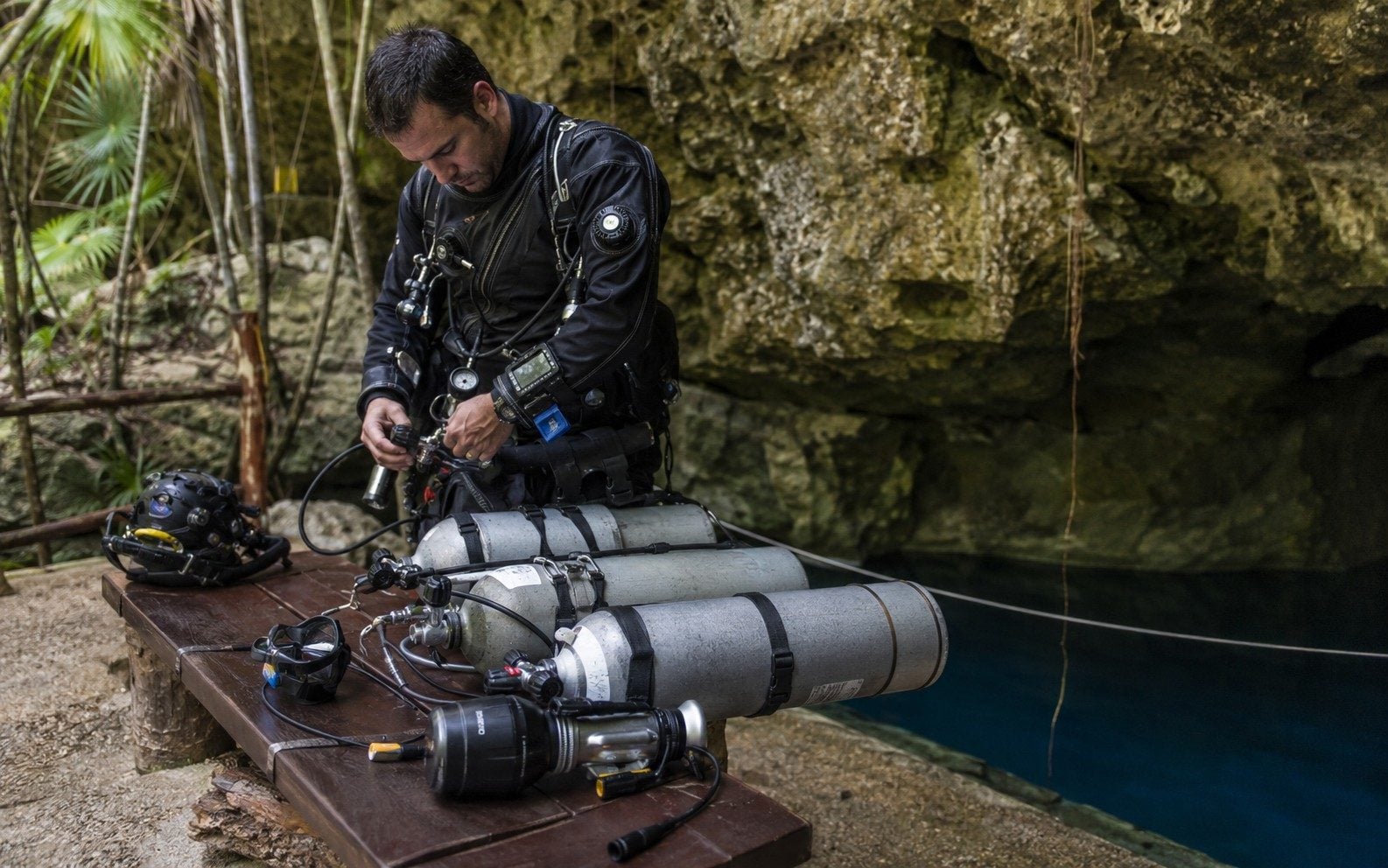
Cavern versus cave diving
Cavern training and cave training exist because an overhead environment changes the normal exit options.
In open water, a diver can generally ascend toward the surface. In an overhead passage, the diver must navigate back to an exit while managing gas, visibility, buoyancy, team position and equipment.
SSI describes cavern training as a specialized program within the daylight zone and cave diving as additional advanced training for cave penetration.
Do not enter an overhead environment independently without the exact training and equipment required.
Photography
Safety comes before a photograph.
Underwater photography divides attention and can affect buoyancy, buddy awareness, gas monitoring, navigation and position near fragile formations.
DAN’s diving safety content emphasizes that photography in cenotes adds task load in a dark overhead environment.
Recreational swimmers should also avoid backing toward an edge or blocking the exit for a photo.
Hygiene and environmental rules
Follow the venue’s shower and product rules.
Some facilities restrict sunscreen, lotions, oils, makeup or insect repellent before swimming. Do not interpret a product label as permission to ignore the local rule.
Use restrooms rather than the water or surrounding jungle.
Emergency planning
Before entering, identify the exit, staff location, first-aid point, meeting place, transportation, mobile-coverage limitations and emergency contact procedure.
Keep medical information and identification accessible to a companion.
Google Maps
Save the exact cenote and route offline. Rural cellular service can be inconsistent.
General regional search: https://www.google.com/maps/search/?api=1&query=Cenotes+Quintana+Roo+Yucatan
Accidental Gringo tips
- Watch the entry before committing to the water.
- Put the phone away during child supervision.
- Leave the water before becoming cold or exhausted.
- Use a dry bag for medication and identification.
- Ask the guide to define “cavern” and “cave.”
- Decline any activity that does not match your comfort or training.
Warnings
Never enter an overhead passage by following a rope, line, diver or light unless you are participating in a properly planned activity for which you are qualified.
Do not enter water when the venue is closed, unattended or restricting access.
Common mistakes
- Treating clear water as proof that the area is shallow or simple.
- Using a life jacket as a substitute for child supervision.
- Confusing recreational snorkeling with cavern or cave exploration.
Frequently asked questions
Are life jackets always required?
Rules differ. Many managed cenotes require them for recreational swimming. Follow the current venue instruction.
Can an open-water scuba diver enter a cenote?
An open-water diver may be able to join certain properly guided cenote or cavern routes, depending on certification, experience, site and operator requirements. Independent cave penetration requires specialized training.
Is snorkeling safe for a non-swimmer?
A non-swimmer should not treat a snorkel as flotation. Use approved flotation, direct supervision and a setting designed for the person’s ability.
Verification notes
Last reviewed: July 14, 2026
Safety procedures differ by venue, municipality and activity. This guide does not replace a venue briefing, professional dive instruction or emergency advice.
Needs Review before publication updates: Venue-specific flotation rules, staffing, jump availability, water access, weather closure procedures, dive requirements and local regulations.