
Local travel guide
Best Time to Visit Chichén Itzá: Heat, Crowds and Seasons
Choose the best time to visit Chichén Itzá based on heat, rain, crowd patterns, seasonal travel, photography and special operations. This guide explains why early arrival matters in every season and when a special date may require extra planning.
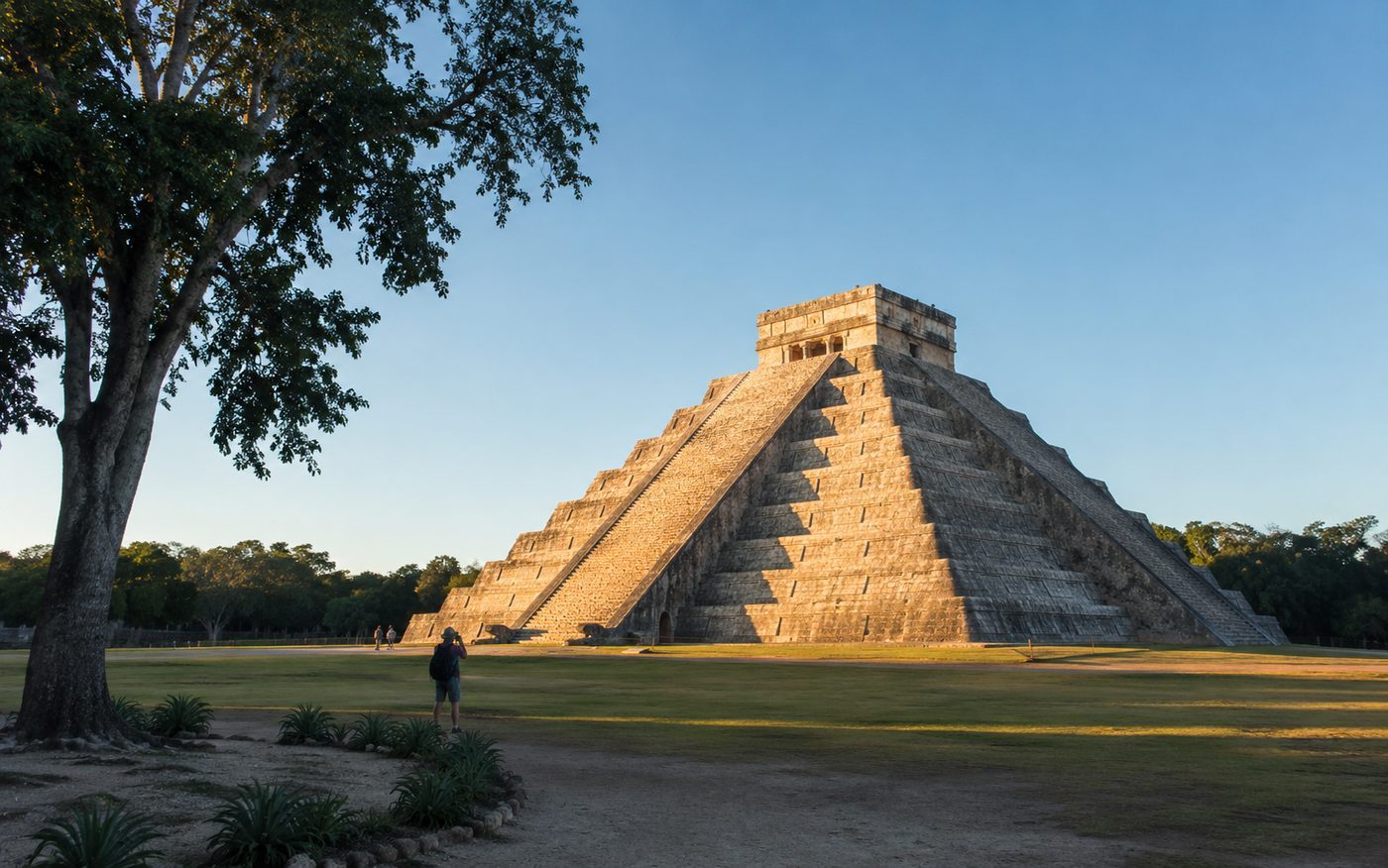
Why arrival time matters more than the month
A traveler can choose a relatively dry month and still be uncomfortable after arriving at midday without water or a hat.
Early arrival provides:
- More time before closing
- Cooler initial walking conditions
- Softer photography light
- Greater flexibility for the southern structures
- Time to pause rather than rush
It does not guarantee an empty site. Private groups, early tours and independent drivers may arrive at similar times.
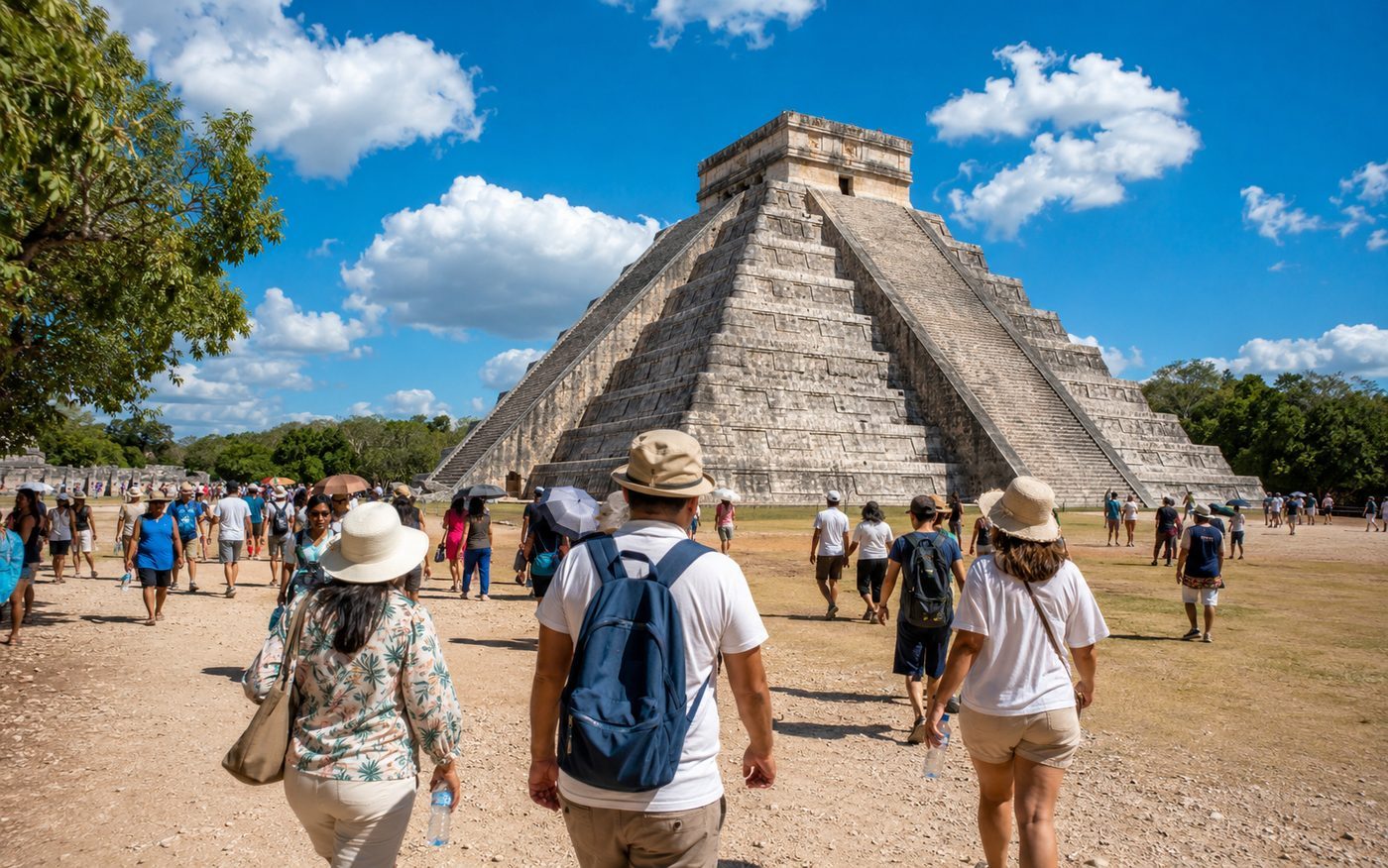
Heat is possible year-round
Do not treat a winter travel date as protection from heat. Sun exposure on the open plazas can feel intense even when the forecast seems moderate.
Plan for:
- Direct sun
- Reflected heat from pale stone and paths
- Humidity
- Limited shade at the exact place you want to stop
- A warmer return to the vehicle
Heat tolerance varies. A route that feels easy to one traveler may be exhausting to another.
Wetter periods
Wetter months can bring greener scenery, dramatic clouds and temporary cooling. They can also bring humidity, wet paths and short intense showers.
Prepare with:
- Light rain layer
- Protection for electronics
- Shoes with traction
- Flexible photography expectations
- Extra travel time
A shower does not always end the visit. Follow staff instructions during severe weather and avoid sheltering in restricted areas.
Drier periods
Drier periods may reduce the chance of rain, but they often overlap with popular travel seasons.
Potential trade-offs include:
- Higher tour demand
- Earlier sellouts
- More visitors from Cancún and Riviera Maya
- Holiday traffic
- Less shade from cloud cover
Book transportation early, but continue checking site status close to travel.
Weekdays and weekends
A weekday may avoid some local weekend demand, but it can still be busy with organized tours. A weekend can be manageable outside major holidays.
The more useful questions are:
- Is it a school holiday?
- Is it an equinox period?
- Are large cruises or travel groups in the region?
- Is the site operating normally?
- Can you arrive early?
Equinox periods
INAH organizes special operations during high-attendance equinox periods. Opening times, ticket access, crowd controls and clearing procedures may differ from normal days.
The light-and-shadow effect on El Castillo is visually important and widely discussed, but claims about exact meaning should be presented carefully. Observation, historical interpretation and modern tourism narratives are not the same category of evidence.
Visit during an equinox when:
- The event is a main travel priority
- You accept larger crowds
- You can follow special instructions
- You have flexible transportation
Choose another date when you primarily want comfortable walking and time to study the architecture.
Holiday periods
Christmas and New Year travel, spring holidays, Easter-period travel and Mexican holiday weekends can increase demand.
During busy periods:
- Reserve transportation earlier
- Confirm pickup points
- Expect slower admission
- Carry water before joining a line
- Avoid tight connections after the visit
Photography timing
Early light can provide:
- Longer shadows
- Less harsh contrast
- Cooler conditions while carrying equipment
- More time to wait for a composition
Midday produces stronger overhead light and more heat. Late-day photography is limited by the public operating schedule and your return transportation.
Professional equipment may require authorization. A good light forecast does not override site rules.
Families
Families often benefit from:
- Early entry
- Short explanations
- A central route first
- Planned snacks and meals outside the site
- One optional afternoon stop rather than several
Do not schedule the most difficult walking after the child is already overheated.
Travelers with limited mobility
Early arrival can reduce heat stress and provide more time for slower movement.
Consider:
- Private transportation
- Central structures as priorities
- Shade breaks
- Outdoor-capable mobility equipment
- A guide who can adapt the route
- Skipping the longest outlying walk
Google Maps
- Chichén Itzá: https://www.google.com/maps/search/?api=1&query=Chichen+Itza+Archaeological+Site
- Pisté: https://www.google.com/maps/search/?api=1&query=Piste+Yucatan
Save the map offline and check travel time on the actual morning of departure.
Accidental Gringo tips
- Prepare clothing and tickets the night before.
- Use the first hour for priority structures.
- Avoid making the Sacred Cenote walk the final decision after exhaustion.
- Carry rain protection without overpacking.
- Verify special-event operations on INAH.
- Keep the afternoon itinerary optional.
Warnings
Weather forecasts do not describe the heat on every exposed plaza. Adjust to actual conditions.
Special dates can have different operating procedures. Do not rely on a normal-day blog post for an equinox visit.
Common mistakes
- Focusing on the month while ignoring arrival time.
- Underestimating special-event crowds.
- Treating cloud cover as a substitute for hydration.
Frequently asked questions
What month is best?
No month guarantees mild conditions or low crowds. Choose the broader season you prefer, then prioritize early arrival.
Is the site empty at opening?
Not necessarily. Opening is still the most practical time for heat management and schedule flexibility.
Is the equinox the best day?
It is the best day only for travelers specifically seeking the event. It is not automatically the best day for a calm first visit.
What happens if it rains?
A brief shower may only pause the visit. Follow staff instructions and be prepared for slippery surfaces and continued humidity.
Verification notes
Last reviewed: July 14, 2026
The stable planning guidance in this article is based primarily on official INAH and UNESCO information. Admission prices, opening hours, special-event procedures, guide availability, transportation schedules, parking arrangements and temporary access restrictions can change.
Check the official sources again shortly before publication and before travel:
- INAH Chichén Itzá visitor page: https://www.inah.gob.mx/zonas/146-zona-arqueologica-de-chichen-itza
- Lugares INAH Chichén Itzá services and rules: https://lugares.inah.gob.mx/en/node/5663
- Government of Yucatán Boleto Único announcement: https://www.yucatan.gob.mx/saladeprensa/ver_nota.php?id=10762
- UNESCO World Heritage listing: https://whc.unesco.org/en/list/483/
Needs Review before future publication updates: Any exact price, schedule, transportation departure, parking fee, authorized-guide rate, special-event access procedure, temporary closure or route restriction.