Short answer: Cancun is unusual because the modern resort city was not a fishing town that slowly turned into a tourism destination. It was deliberately planned by the Mexican government beginning around 1969–1970, with a Hotel Zone, a mainland city for residents and workers, and an international airport built as parts of the same larger project.
That is easy to forget when you are standing in the Hotel Zone today. Cancun feels established now—resorts, restaurants, shopping, traffic, airport transfers, all of it. But the version travelers know is only a little more than half a century old.
What was here before Cancun?
The coast was not literally empty, and that distinction matters. There were communities in the region, including Puerto Juarez on the mainland, while the barrier-island area that became the Hotel Zone was largely undeveloped compared with what exists today.
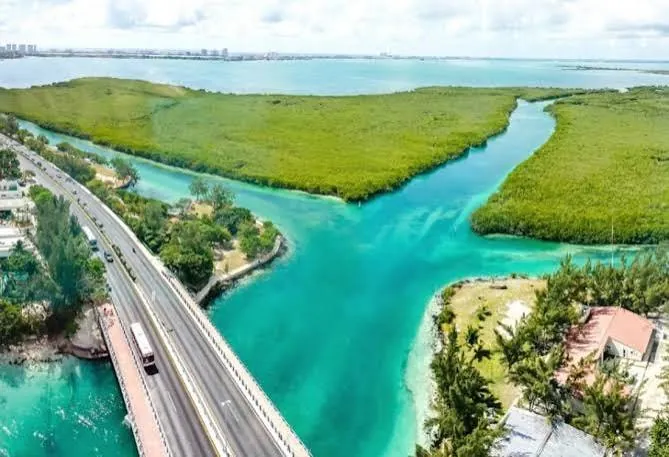
What did not exist was the modern city of Cancun as we understand it now. No line of international resorts. No Party Center. No La Isla shopping mall. No international airport processing millions of travelers.
Why did Mexico build Cancun?
In the late 1960s, Mexico began pursuing a more deliberate model of tourism development. Cancun was selected as one of the locations for what became a planned tourism center. The project was authorized in 1969 and development began in 1970.
The basic idea was bigger than building hotels. The master plan separated the project into a tourism zone, a mainland residential city for permanent residents, and transportation infrastructure including an international airport. That decision explains a lot about the Cancun you see today: the Hotel Zone and downtown were designed to serve different functions from the beginning.
Was FONATUR responsible for creating Cancun?
Yes, but there is a timeline detail that gets simplified too often. The planning work began under INFRATUR, one of FONATUR’s predecessors. FONATUR itself was created in 1974 through the merger of earlier tourism-development funds and then became closely identified with Cancun and Mexico’s other planned tourism centers.
So saying “FONATUR created Cancun in 1970” is close enough for casual conversation but not quite historically precise. The Cancun project had already begun before FONATUR existed under that name.
When did the first Cancun hotels open?
The turning point was 1974. Playa Blanca opened that year and is generally recognized as Cancun’s first hotel. Historical accounts from INAH describe 332 hotel rooms spread among three hotels during Cancun’s first year of hotel operations.
That is almost impossible to picture now. Early visitors were arriving at a destination that was still being assembled around them rather than at the mature resort corridor we know today.
Downtown Cancun was part of the plan too
One of the more interesting parts of Cancun’s history is that the mainland city was not an afterthought. Workers, hotel employees and their families needed somewhere to live, so the urban side of Cancun developed alongside the tourism zone.
That is why downtown Cancun feels so different from the Hotel Zone. One was designed primarily around tourism; the other had to function as an actual city. The supermanzana layout, local markets, neighborhoods and everyday services are part of that second Cancun that many visitors barely see.
Was Cancun really built by a computer?
You will often hear a simplified story that a computer “chose Cancun.” Data analysis did play a role in Mexico’s search for suitable tourism-development locations, but the city was not created by a machine pressing a button. Government planners, engineers, economists, architects and investors still had to select, design, finance and physically build the destination.
The more interesting story is not that a computer picked a beach. It is that Mexico attempted to build an international tourism city almost from the ground up—and that the experiment became one of the best-known beach destinations in the world.
What did early Cancun probably feel like?
Much smaller, much rougher around the edges and much more isolated. There were only a handful of hotels, enormous gaps between developed areas and nowhere near today’s range of transportation, shopping and services.
I would be careful romanticizing that period too much. Empty beaches sound wonderful from today’s perspective, but early Cancun was also a massive construction project. Roads, housing, utilities and tourism infrastructure were being built while the destination was beginning to receive visitors.
Why this history matters when you visit today
Once you know the story, the geography makes more sense. The Hotel Zone is not simply “the beach part of town.” Downtown is not merely the cheaper alternative. They grew from two different pieces of the original plan.
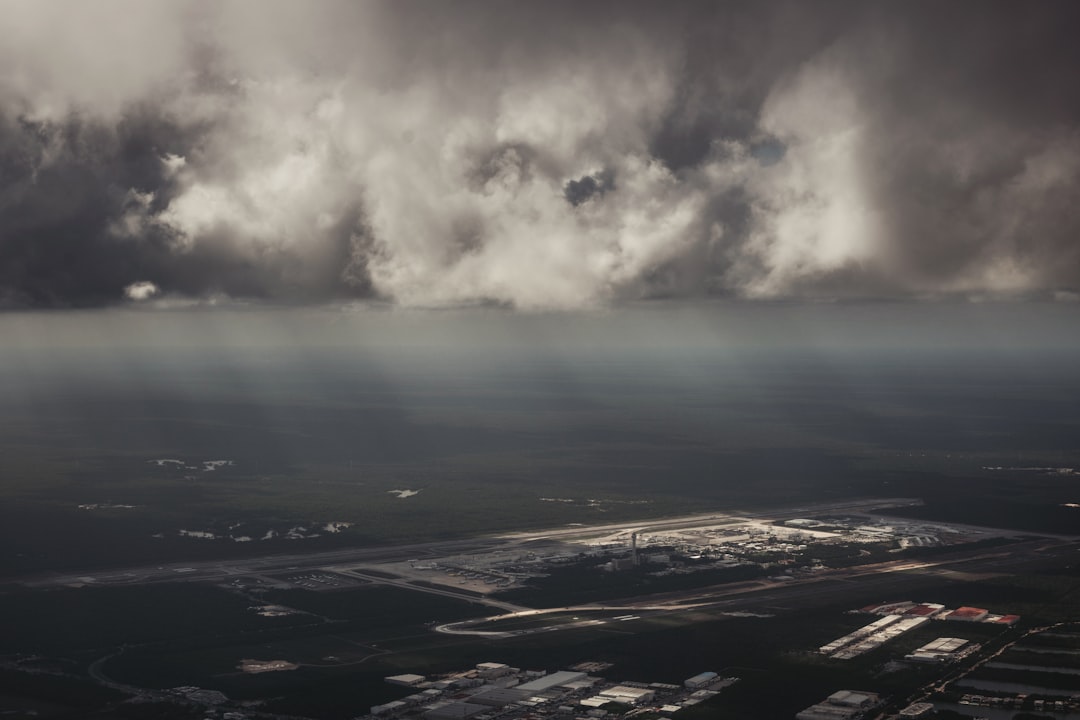
I live in Cancun, and this is one of the things I find most interesting about the city: it can feel both highly polished and strangely young. You can move from the Hotel Zone to downtown and see two different ideas of Cancun within the same city.
There are places in Yucatan where you are walking through centuries of visible urban history. Cancun gives you something different: a chance to see what happens when a government decides to create a modern tourism city and then watches it grow far beyond the original scale.
My take
I do not think Cancun needs a fake “before tourists ruined it” story. Its real history is more interesting. The place was deliberately built for tourism, and then a real city grew around and beyond that plan.
If you want the practical version of Cancun today—where to stay, how the Hotel Zone works, beaches, transportation and what is actually worth doing—start with our Cancun guide. Understanding how the city started makes the modern version a lot easier to read.
Frequently asked questions
When was Cancun founded?
The modern Cancun tourism project was authorized in 1969 and development began in 1970. Cancun began operating as a planned tourism center in the 1970s.
What was Cancun before the resorts?
The barrier-island area that became the Hotel Zone was largely undeveloped, while communities already existed on the mainland and elsewhere in the region. The modern resort city did not yet exist.
What was the first hotel in Cancun?
Playa Blanca, opened in 1974, is widely recognized as Cancun’s first hotel.
Was Cancun always a tourist city?
Modern Cancun was planned specifically as a tourism development, although the region itself had communities and a much longer history before the resort project began.