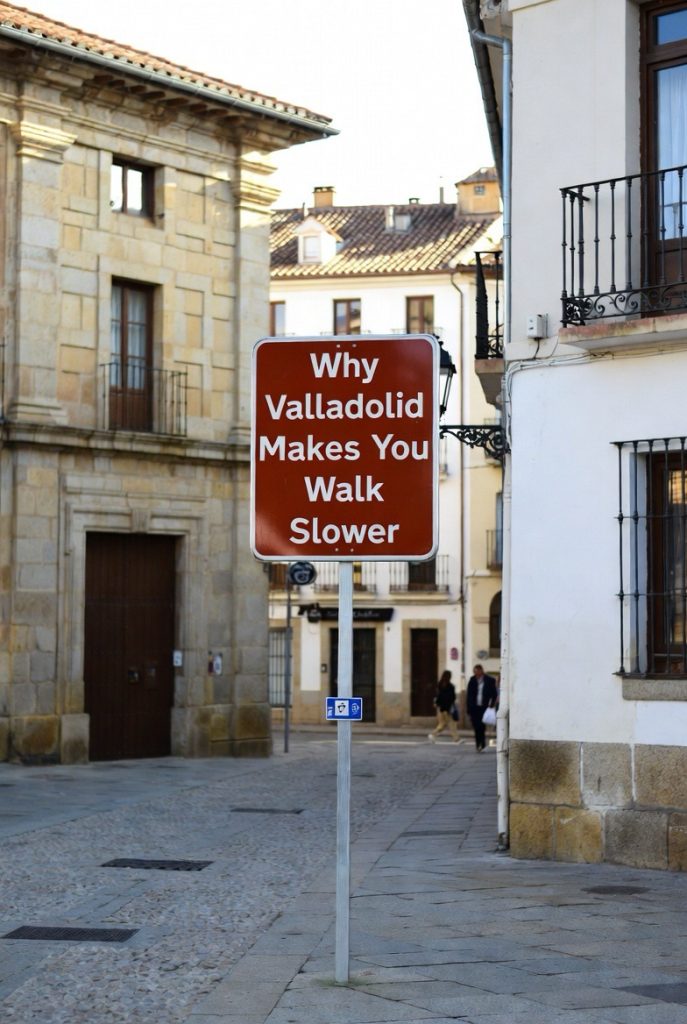
We didn’t plan to stay in Valladolid.
It was supposed to be a stop between somewhere and somewhere else. A place to see, photograph, maybe understand for a day or two.
But Valladolid doesn’t move at the pace of itineraries.
It moves at the pace of footsteps.
In the morning, the light hits the pastel walls gently, not dramatically. Nothing demands your attention. No one is shouting to be seen. The streets feel like they belong to the people walking them — not the people visiting them.
And that changes something.
When you walk in Valladolid, you start noticing things you would normally miss in a faster city. The way chairs are arranged outside a small shop before it opens. The sound of someone sweeping the sidewalk. The echo of voices across the plaza in the late afternoon.
You realize quickly that this city was not designed to impress you.
It was designed to function.
That’s part of why it feels so grounding.
Unlike destinations built around spectacle, Valladolid still revolves around daily life. The plaza isn’t staged. The streets aren’t curated. The rhythm is real — shaped by routines that existed long before visitors arrived.
And when you stay long enough, you start to sync with it.
You stop planning exact routes. You turn down streets without knowing where they lead. You linger longer in the shade. You let conversations stretch.
Walking becomes less about reaching something and more about understanding where you are.
There’s history here, of course. Colonial walls, deep Maya roots, stories layered into stone. But Valladolid doesn’t force those stories on you. It lets them surface slowly.
Some cities are experienced best from behind a windshield.
Valladolid isn’t one of them.
It’s a place that reveals itself at human speed — and once you adjust to that rhythm, it’s hard to go back to moving quickly.
We thought we were passing through.
But the city had other ideas.